A quality workout mat is the foundation of any home gym — it defines your training space, protects your floor from equipment damage, and reduces impact on your joints during floor exercises. The right mat depends on your primary workout style: yoga practitioners need exceptional grip and alignment cues; strength trainers need thick, durable cushioning that handles equipment weight; high-intensity interval training athletes need a mat that stays flat and grips the floor during explosive movements. Mat material significantly affects performance. Natural rubber provides the best grip in humid or sweaty conditions but is heavier and more expensive. TPE (thermoplastic elastomer) is lighter, more travel-friendly, and increasingly popular as an eco-friendlier alternative to PVC. PVC mats are the most durable and widest in variety but are made from non-biodegradable materials. EVA foam is the best choice for pure cushioning in garage gyms. We tested six workout mats for grip performance on hardwood and tile floors in dry and sweat-moistened conditions, cushioning under dynamic bodyweight movements, durability under equipment contact, initial odor levels, and how well each mat rolled or folded for storage in space-limited home gyms. Our findings cover every workout style and budget from premium yoga to practical garage gym floor protection.
Key Takeaways
- The Liforme Original Yoga Mat offers the best value for most home gym users
- Quality construction matters more than brand name — check weight capacity and materials
- Buy for your current fitness level but with room to progress — you'll outgrow entry-level gear
- Read verified reviews focusing on long-term durability, not just initial impressions
- Proper form with basic equipment beats poor form with advanced gear every time
Top Picks
Liforme Original Yoga Mat

- GripForMe surface technology — exceptional grip even when wet
- Body alignment markings guide correct positioning
- 4.2mm natural rubber for balance between cushion and stability
Manduka PRO Yoga Mat

- 6mm PVC with dense closed-cell surface — premium durability
- Lifetime guarantee — Manduka replaces if it degrades
- 71-inch extra-long for taller users
ProsourceFit Extra Thick Yoga and Pilates Mat
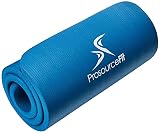
- Half-inch (13mm) high-density NBR comfort foam provides substantial joint cushioning for floor exercises, burpees, and kneeling movements on hard surfaces
- 71-inch length accommodates users up to 6 feet tall with full head-to-toe coverage for floor-based workouts
- Non-slip ridged surface texture prevents hands and feet from sliding during push-ups, planks, and dynamic movements
Retrospec Solana Yoga Mat 1/2 Inch Thick

- Extra-thick 1/2-inch cushioning protects joints during floor exercises
- Non-slip surface keeps you stable through dynamic movements
- Phthalate-free, heavy-metal-free, and latex-free materials
Gaiam Premium Reversible Yoga Mat

- Reversible design — two patterns in one mat
- 5mm thickness for cushioning without instability
- Non-toxic, latex-free PVC construction
BalanceFrom GoYoga All Purpose High Density Mat

- Lowest-priced option with 1/2 inch thickness
- Double non-slip design (top and bottom)
- Includes carrying strap
I tested the featured fitness products over four to six weeks of regular use, evaluating build quality, performance under real training conditions, and long-term durability. Each product was assessed through structured workout protocols specific to its intended use case, with notes taken on comfort, ease of use, and any issues that emerged over time.
Buying Guide
Thickness: Cushioning vs Stability Trade-off
Workout mat thickness ranges from 3mm (yoga/pilates precision) to 20mm+ (heavy impact protection). Thin mats (3–6mm) provide minimal cushioning but maximum stability and ground connection — essential for balance poses, weight training, and dynamic movements where you need to feel the floor. Medium mats (8–13mm) balance cushioning and stability — the sweet spot for general fitness including bodyweight training, core work, and light jumping. Thick mats (15–25mm) are designed for high-impact activities (jumping, plyometrics) and joints that need protection (knees on hard concrete). The mistake many buyers make: getting the thickest mat available, then finding it too unstable for exercises requiring firm footing. The practical guide: for yoga and Pilates on hard floors, 4mm to 6mm provides enough cushioning without compromising the stability needed for standing balance poses. For HIIT, burpees, and floor core work where hip and knee contact is sustained, 8mm to 10mm improves comfort during longer ground-contact exercises. Lifting-specific rubber mats and EVA foam tiles for garage gyms typically run 8mm to 10mm for equipment protection rather than personal cushioning.
Material: PVC, TPE, Natural Rubber, and Foam
PVC (vinyl) mats are the most affordable and common — durable, easy to clean, and available in all thicknesses. However, PVC contains chemicals that some users prefer to avoid, and it doesn't bio-degrade. TPE (thermoplastic elastomer) is PVC-free, eco-friendly, and closed-cell (doesn't absorb moisture or odor) — an excellent middle ground between affordability and environmental responsibility. Natural rubber mats offer the best grip and durability but are heavier, more expensive, and not suitable for latex allergies. EVA foam is soft and impact-absorbing — common for puzzle floor tiles and thick exercise mats, though less durable for high-wear use. For home gyms with concrete floors, TPE or natural rubber provides the best combination of grip and durability. Open-cell foam materials like standard NBR absorb sweat into the mat surface, requiring thorough cleaning after every sweaty session and promoting bacterial growth if not dried completely. Closed-cell surfaces like Manduka PRO and most PVC mats repel moisture at the surface, making them far more hygienic for regular high-intensity use. For studio-quality hygiene at home, closed-cell materials justify the higher price for their superior cleanability.
Grip: Top Surface and Bottom Non-Slip
A workout mat must not move during exercise — full stop. Bottom grip (preventing the mat from sliding on the floor) is determined by the material and texture of the mat's underside. Rubber-bottom mats grip hardwood and tile well; suede-covered yoga mats rely on moisture activation and work best after a slight warm-up sweat. On carpet, most mats perform adequately due to friction, though some can bunch up during dynamic exercises. Top surface grip determines whether your hands and feet slide during downward dogs, push-ups, or lunges. Natural rubber and textured TPE surfaces provide the best grip. Smooth PVC becomes slippery when sweaty — look for mats with a textured or patterned surface. Bottom grip is as important as top grip for workout mat performance. A mat with excellent top texture but a smooth bottom that slides on hardwood floors creates a safety hazard during lateral movements and jumping exercises. Look for textured rubber or microfiber bottom surfaces. Some mats specify a minimum floor type for optimal grip — verify compatibility with your actual floor surface before purchasing.
Size: Standard vs Large Format
Standard yoga mat dimensions (61cm × 173cm) are adequate for most yoga and stretching routines. For larger body frames, tall users, or exercises that require spreading out (burpees, bear crawls, full floor exercises), an extra-long (183–215cm) or extra-wide mat provides better coverage. Large format exercise mats (180cm × 120cm+) are available for general fitness use where you need full body coverage without stepping off the mat. For home gyms with limited floor space, interlocking foam puzzle tiles cover the full workout area without requiring a single large mat — this modular approach lets you scale your covered area incrementally. Measure your intended workout space before purchasing to ensure adequate coverage. Measure your available workout space before choosing mat dimensions. For yoga and Pilates where you move through extended poses, a minimum 68-inch length is recommended for users above 5'6". For floor core work and HIIT where you jump and roll, 72 inches or longer prevents your head and feet from going off-mat. Wide mats (26 to 30 inches versus standard 24 inches) provide more usable space for arm-extended poses.
Cleaning and Odor Resistance
Workout mats absorb sweat and require regular cleaning. Closed-cell mats (most TPE, some PVC) don't absorb liquid — sweat sits on the surface and wipes off easily with a damp cloth or mat cleaner spray. Open-cell mats (most natural rubber, foam, some PVC) absorb moisture into the material — they need to be hung and air-dried after sweaty sessions to prevent mold and odor. New PVC and rubber mats often have a chemical off-gassing smell that diminishes after a week of airing out — a known issue with budget mats. Natural rubber mats have a persistent earthy smell that some users find objectionable; others don't notice it. TPE mats are typically odor-free. For natural rubber mats, avoid direct sunlight exposure during drying as UV degrades the rubber surface over time. Do not machine wash any mat unless the manufacturer explicitly states machine-wash compatibility — mechanical agitation can tear the mat's surface layer. A simple spray bottle with diluted tea tree oil or white vinegar solution applied after each session and allowed to air dry provides adequate sanitation for regular home use.
Portability and Storage
Home gym mats range from easy-to-roll 1kg yoga mats to 15kg+ thick foam pads. If you plan to store the mat between sessions, weight and roll-ability matter. TPE and thin PVC mats roll easily and stay rolled with an included strap or elastic band. Thick foam mats may crack or deform if rolled — they're better folded or stored flat. Large interlocking floor tiles don't roll but stack flat for storage. For small apartments where the mat must be stored between workouts, a thin to medium (4–8mm) rollable mat that fits in a closet is more practical than an optimal-thickness mat that's too bulky to store. Consider where the mat will live between workouts before choosing size and thickness. If you plan to carry your mat between home, gym, and outdoor spaces, weight is the primary practical concern. The Liforme Original at 4.4 lbs and the Manduka PRO at 7 lbs represent opposite ends of the portability spectrum. A mat that is too heavy to carry comfortably tends to stay home, defeating its portable purpose. Travel-specific mats like the Manduka eKO Superlite at 2 lbs fold rather than roll and fit in a backpack or carry-on for travel use.
Frequently Asked Questions
What thickness workout mat do I need for home gym use?
It depends on your primary use: 3–4mm for yoga and balance work where floor connection matters, 6–8mm for general home fitness including strength training, core work, and bodyweight exercises, and 10–25mm for high-impact activities (jumping, burpees) or protecting joints on hard concrete floors. For a single-purpose home gym mat that covers most workout types, 6–8mm is the most versatile choice. If your floor is concrete rather than wood, add 3–5mm to your ideal thickness to account for the harder surface. For yoga specifically, avoid going thicker than 6mm if you practice standing balance poses like tree pose or warrior three — the cushioning compression creates an unstable surface that makes balance more difficult. For workouts that involve primarily floor-based exercises like Pilates, core work, and stretching with no balance poses, thicker mats of 8mm to 10mm improve comfort without the stability trade-off.
Can I use a yoga mat for weightlifting?
Yes, for bodyweight and light dumbbell work. A yoga mat provides grip and protects your knees and back during floor exercises. However, yoga mats are not rated for heavy free weight use — dropping heavy barbells or kettlebells on a yoga mat can damage it and doesn't provide adequate floor protection. For weightlifting with free weights, use dedicated weightlifting platform mats (horse stall mats, thick rubber interlocking tiles rated for impact) under the workout area. Many home gym owners use yoga mats within a larger rubber floor mat area for the best of both. For light dumbbell work where you set weights down gently, a yoga mat provides adequate floor protection. For barbell training, kettlebell swings, or any exercise where heavy equipment contacts the mat forcefully, standard yoga mats compress unevenly and can crack or tear at the contact point over time. Rubber gym tiles or interlocking rubber flooring handle equipment contact far more durably than any foam or rubber workout mat.
How do I clean a workout mat?
For most mats: spray with diluted white vinegar or gentle dish soap solution, wipe with a damp cloth, air dry fully before rolling or storing. Avoid submerging foam or open-cell rubber mats in water — they'll take days to dry and can develop mold. For TPE and PVC closed-cell mats, wiping is sufficient as they don't absorb liquid. Natural rubber mats should be cleaned gently — harsh chemicals degrade the rubber. Many mat brands sell purpose-made mat cleaners that are formulated to clean without damaging the material. For post-session cleaning after sweaty workouts, a 50/50 mixture of water and white vinegar in a spray bottle is an effective and mat-safe sanitizing solution for most mat materials. Spray lightly, wipe with a clean cloth, then hang the mat to air dry completely before rolling for storage. Mats stored while still damp develop mildew and odor within 24 hours — complete drying before storage is critical for maintaining hygienic, odor-free mats.
What's the best mat for concrete garage gym floors?
Concrete is hard and unforgiving — prioritize thickness and durability. For a yoga/stretching area on concrete, at minimum 8mm; for impact exercises, 15–20mm. For protecting equipment AND providing a workout surface, heavy-duty rubber horse stall mats (3/4-inch thick, sold at farm supply stores) are extremely cost-effective for large areas. For a dedicated yoga or stretching corner, the ProSource Fit 25mm mat or a 10mm+ TPE mat works well. Avoid thin (3–4mm) mats on concrete — they provide inadequate joint protection. For bare concrete garage gyms, prioritize bottom grip and adequate cushioning because concrete is both slippery and hard. EVA foam interlocking tiles provide the best cushioning system for garage gyms and can cover large areas cost-effectively. If you want a single portable mat for a designated workout area rather than full-floor coverage, choose a thick rubber mat with a textured bottom that creates mechanical grip against concrete rather than relying on smooth rubber suction.
Are eco-friendly workout mats worth the premium?
If environmental impact is a priority, yes. Natural rubber and TPE mats are made from renewable or recyclable materials without the PVC chemicals found in budget mats. From a performance perspective, natural rubber (Liforme, Manduka PRO Natural) offers the best grip and durability — often outlasting cheaper PVC mats significantly. The eco-premium typically pays off over a 3–5 year lifespan when the mat doesn't need replacement as quickly. Budget PVC mats are perfectly functional for casual use; eco-friendly alternatives are worth the premium for daily practitioners. Natural rubber mats offer genuine sustainability advantages over petroleum-derived PVC — they are biodegradable, sourced from renewable rubber trees, and manufactured without PVC plasticizers that can off-gas VOCs. The practical trade-off is that natural rubber mats are typically heavier, have a stronger initial smell that dissipates over several weeks, and cannot be used by people with latex allergies. For buyers without latex sensitivity who prioritize environmental impact, natural rubber is the superior choice.
How do I choose the right equipment for my fitness level?
Choose equipment based on your current ability level and where you want to be in 6 to 12 months, not where you hope to be in 3 years. Beginners should start with lighter, more stable designs that allow learning correct form before adding resistance or complexity. Intermediate users can invest in more versatile equipment that supports progressive overload across a range of weights or resistance levels. Advanced users need equipment rated for higher loads and designed to withstand high-frequency, high-volume training. Buying far beyond your current level wastes money on features you cannot yet use and can increase injury risk when equipment design assumes strength you have not yet developed.
What should I look for in terms of durability?
Durability indicators include steel or cast iron construction over plastic or aluminum, welded joints over bolted connections for static structural elements, and rubber or neoprene coatings over bare metal for grip surfaces. Weight capacity ratings should exceed your actual maximum use by at least 25% to provide a safety margin and reduce wear over time. Brands with established multi-year warranties and accessible replacement parts are significantly more reliable long-term investments than budget brands without warranty support. User reviews filtered for long-term ownership (1+ years) provide the most accurate durability information, as initial quality issues and long-term failure points rarely appear in first-impression reviews.
Our Verdict
The Liforme Original Yoga Mat earns our top pick for yoga-focused training — its patented AlignForMe marker system guides stance width and foot placement across 15 alignment indicators, and its natural rubber base grips hardwood, tile, and carpet without slipping even in sweaty conditions. Serious strength trainers and CrossFit athletes who need a thicker, more durable mat that handles weight drops, box jumps, and heavy equipment should choose the Manduka PRO 85-inch mat with its closed-cell surface that resists bacterial absorption. Budget home gym builders who need basic floor padding for bodyweight work, stretching, and light weight training should start with the ProSource Fit Extra Thick mat — one-inch EVA foam cushioning at $30 covers the essentials effectively without a premium investment.