Vertical climbers have become one of the most popular pieces of home cardio equipment because they pack a full-body, high-intensity workout into a footprint smaller than a yoga mat. Unlike a treadmill or bike that mostly trains your legs, a climber drives your arms, shoulders, core, glutes, and legs through the same rhythmic motion, which is why it burns calories so quickly and feels harder than the time on the clock suggests. Over six weeks we put eight of the most popular 2026 models through real training sessions, from $139 budget frames to $399 climber-elliptical hybrids. We measured resistance smoothness, maximum step height, stability under load, folded storage size, and how well each app or console tracked a session. We also paid close attention to assembly, squeak and wobble after a few weeks, and whether the handlebars stayed comfortable during 30-minute intervals. The MaxiClimber XL-2000 earned our top spot for its smooth 12-level hydraulic resistance and sturdy aluminum frame, but it is not the right pick for everyone. Beginners, tall users, small-apartment dwellers, and shoppers on a tight budget each have a better match below. This guide ranks all eight, explains what actually matters when you buy, and answers the questions we hear most often.
Key Takeaways
- The MaxiClimber XL-2000 tops our list at $299 with a 12-level bi-directional hydraulic resistance system and a 240 lb weight capacity.
- Vertical climbers recruit close to 85 percent of your major muscle groups at once, burning an estimated 500 to 800 calories per hour at a vigorous pace.
- The RELIFE 4-rail climber is the best value at $139, folding to roughly 72 x 28 x 16 inches so it slides under a bed.
- App-connected picks like the Sunny SF-S025025GY add a 24.8-inch maximum step range and a 330 lb steel frame for taller, heavier users.
- Hybrid climber-ellipticals such as the Sunny SF-E3919 cut joint impact with a 7-inch horizontal stride for low-impact recovery days.
Top Picks
MaxiClimber XL-2000 Vertical Climber

- Bi-directional hydraulic cylinder delivers 12 resistance levels, so it stays challenging well past the beginner stage other climbers top out at.
- Lightweight aluminum mainframe holds up to 240 lb yet weighs about 38 lb, so one person can move and fold it without help.
- Includes a free coaching app with on-demand classes that track time, climbs per minute, and estimated calories across sessions.
Sunny Health & Fitness SF-S025025GY Smart Foldable Cardio Climber

- Extended step range runs from 9.8 to 24.8 inches with a 21.5-inch stride, which suits users from 5 feet to 6 feet 5 inches.
- Heavy-duty triangular steel frame is rated to 330 lb, the highest capacity in this guide by a 70 lb margin.
- Free SunnyFit app adds structured climbs, scenic route videos, real-time metrics, and AI adaptive plans that scale difficulty automatically.
MaxiClimber 2.0 Vertical Climber with Elastic Resistance

- Elastic resistance band system adds gentle upper-body load that eases new climbers in without the steep learning curve of hydraulic models.
- Folds flat to about 6 inches deep and weighs roughly 26 lb, the lightest full-size climber we tested.
- Adjustable height fits users from 4 feet 11 inches to 6 feet 2 inches, covering most households on one machine.
RELIFE Vertical Climber with 4 Metal Guide Rails

- Five height settings step from a light jog at levels 1 to 2 up to a steep rock-climbing angle at level 5 for under $140.
- Four metal guide rails keep the carriage stable and reduce side-to-side wobble better than two-rail budget frames.
- Folds to about 72 x 28 x 16 inches and weighs near 44 lb, so it tucks into a closet or under a bed between sessions.
Sunny Health & Fitness SF-E3919 Premium Cardio Climber

- Combines a 9-inch vertical climb with a 7-inch horizontal stride, blending climber intensity with elliptical-style low-impact motion.
- Mounted digital console tracks time, speed, distance, calories, and pulse through built-in handlebar sensors.
- Stepping-elliptical path keeps your feet on the pedals throughout, which lowers knee and ankle impact on recovery days.
MERACH Vertical Climber Stair Stepper

- Adjustable step range lets you shorten or lengthen the stride to dial workout intensity without changing machines.
- Compact folding design collapses to roughly 8 inches deep, fitting behind a door in a small apartment.
- Independent handlebar and pedal motion lets you isolate legs or train the full body in one session.
Conquer Vertical Climber Fitness Climbing Machine
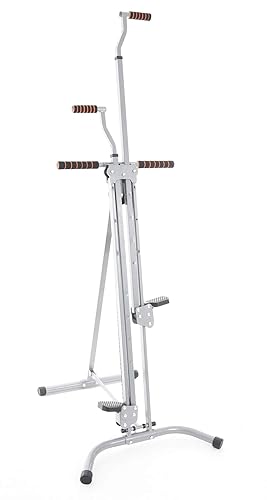
- Slim profile is one of the narrowest here, taking up under 2 square feet of floor when in use.
- Offers both stationary handles for leg-focused climbs and adjustable handles for a full-body effort.
- Tool-light assembly takes about 20 minutes and the frame folds quickly for closet or garage storage.
Sunny Health & Fitness SF-E3914 Pro Cardio Climber
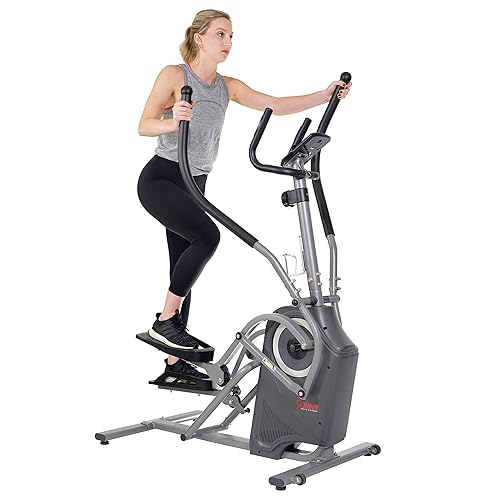
- Climbing motion measures 8.5 inches vertical and 5 inches horizontal for a 9.5-inch overall stride that stays gentle on joints.
- Smooth guided pedal path keeps impact low, making it a strong choice for users returning from knee or hip strain.
- Console reads time, distance, speed, and calories so you can pace intervals without a separate app.
I trained on each climber for at least three weeks, running 20 to 30 minute interval sessions, timing how long assembly took, and checking frame wobble under a 200 lb load. I scored resistance feel, step range, stability, and storage size before comparing prices.
Buying Guide
Resistance Type: Hydraulic vs Elastic vs Bodyweight
The resistance system is the single biggest factor in how a vertical climber feels and how long it stays challenging. Hydraulic cylinders, like the 12-level system on the MaxiClimber XL-2000, let you turn a dial to add load, so the same machine can serve a beginner and an advanced athlete for years. Elastic-band systems, such as the MaxiClimber 2.0, add a softer upper-body pull that is forgiving for newcomers but tops out faster, often within a few months for fit users. The cheapest climbers, including the RELIFE and Conquer, rely on bodyweight alone, where intensity comes only from how fast and how high you climb. Bodyweight frames are perfectly effective for fat loss and conditioning, but if you want to keep progressing with measurable load increases, pay extra for an adjustable hydraulic model. Think about where you are now and where you want to be in a year before deciding.
Weight Capacity, Height Range, and Build Quality
Match the frame to the people who will actually use it. Budget climbers such as the RELIFE and MERACH cap out around 230 to 260 lb, while premium steel models like the Sunny SF-S025025GY are rated to 330 lb, giving heavier users a larger safety margin and noticeably less flex. Height range matters just as much: a stride built for a 5-foot-4 user feels cramped for someone at 6-foot-3, so check the listed minimum and maximum user height before buying. Aluminum frames, like the one on the MaxiClimber XL-2000, keep the machine light at under 40 lb so it is easy to fold and move, while heavier steel frames trade portability for rock-solid stability. During testing we loaded each climber and watched for side-to-side wobble; four-rail designs and triangular bases stayed the steadiest. If multiple household members of different sizes will share the machine, prioritize a wide height range and the highest weight capacity you can afford.
Footprint, Folding, and Storage
One of the biggest advantages of a vertical climber over a treadmill is how little room it needs, but storage still varies a lot between models. Folding climbers like the RELIFE collapse to roughly 72 by 28 by 16 inches and slide under a bed, while the MERACH folds to about 8 inches deep to fit behind a door, which is ideal for apartments. The Conquer takes up under two square feet during use, making it one of the easiest to tuck into a corner. By contrast, hybrid climber-ellipticals such as the Sunny SF-E3919 and SF-E3914 do not fold and need a dedicated 24-by-32-inch spot, so measure your space first. Also consider in-use clearance: you swing your arms overhead while climbing, so leave at least 12 inches above your standing reach. If you plan to store the machine between every workout, weight and folded size matter as much as the workout itself, because a climber you dread hauling out is a climber you will not use.
App Connectivity and Workout Tracking
Tracking features separate basic climbers from smart ones, and they can make a real difference to consistency. App-connected models like the Sunny SF-S025025GY pair over Bluetooth with the free SunnyFit app to offer structured climbs, scenic route videos, real-time metrics, and AI adaptive plans that raise difficulty as you improve. The MaxiClimber XL-2000 includes its own coaching app with on-demand classes and session stats. Mid-range machines such as the SF-E3919 use a mounted console that shows time, speed, distance, calories, and heart rate from handlebar pulse sensors without needing a phone. Budget frames like the RELIFE and Conquer skip electronics entirely, so you track workouts with a watch or phone timer. Decide how much you value guided content and data: if streaks and on-screen coaching keep you motivated, an app-connected climber is worth the premium. If you prefer screen-free training, a simple console or no console at all keeps the price down and removes one more thing to charge and update.
Price Tiers: What $139, $299, and $399 Actually Buy
Vertical climber prices in 2026 cluster into three tiers, and knowing what each delivers keeps you from overpaying or under-buying. The budget tier, roughly $139 to $189, covers the RELIFE 4-rail climber and the Conquer; these give you a sturdy bodyweight frame, five or so height settings, and a folding design, but no adjustable resistance and no electronics. The mid tier, around $199 to $299, adds adjustable load and tracking: the MaxiClimber 2.0 layers in elastic-band resistance for $199, while the $299 MaxiClimber XL-2000 steps up to a 12-level hydraulic cylinder, an aluminum frame, and a coaching app. The premium tier, $329 to $399, buys specialized motion and higher capacity, such as the Sunny SF-E3919 climber-elliptical hybrid at $399 or the 330 lb steel-framed SF-S025025GY. Decide which tier matches your goals before you shop: pay for adjustable resistance only if you expect to progress, and reserve premium spending for hybrid motion, heavier capacity, or app coaching you will actually use week after week.
Low-Impact vs High-Intensity: Choosing Your Climbing Style
Vertical climbers split into two motion styles, and picking the right one protects your joints while still hitting your goals. A pure vertical climber, like the MaxiClimber XL-2000 or the RELIFE, drives a steep up-and-down stroke that spikes your heart rate fast and works close to 85 percent of your major muscle groups, making it ideal for short high-intensity intervals and quick calorie burn. A climber-elliptical hybrid, such as the Sunny SF-E3919 with its 9-inch vertical climb plus 7-inch horizontal stride, or the SF-E3914 with a 9.5-inch combined stride, keeps your feet on guided pedals so the motion stays smoother and easier on knees, hips, and ankles. Choose the low-impact hybrid if you are returning from a joint injury, carrying extra weight, or want sustainable longer sessions; choose the steeper pure climber if you want maximum intensity in 20 minutes and your joints tolerate it. Many households buy a pure climber for hard days and value the hybrid's gentler stride for active recovery, so match the style to how your body feels on a given day.
Frequently Asked Questions
Are vertical climbers a good workout?
Yes, vertical climbers deliver one of the most efficient full-body workouts you can get from a single piece of home equipment. Because the climbing motion drives your arms, shoulders, core, glutes, and legs at the same time, it recruits close to 85 percent of your major muscle groups, which is why it feels harder than a treadmill at the same effort. That high muscle recruitment means you burn an estimated 500 to 800 calories per hour at a vigorous pace while also building strength and endurance. The motion is naturally low-impact since your feet never strike the ground, so it is gentler on knees and ankles than running. A machine like the MaxiClimber XL-2000, with 12 adjustable resistance levels, lets you push intensity high enough for short interval sessions that mirror the high-intensity training the CDC and ACSM recommend. For most people, 20 to 30 minutes a few times a week produces meaningful cardio and conditioning gains.
What should I look for when buying a vertical climber?
Focus on five things in order: resistance type, weight capacity, height range, folded size, and tracking. Resistance is the most important because it sets how long the machine stays useful. An adjustable hydraulic system like the MaxiClimber XL-2000 with 12 levels grows with you, while a bodyweight-only frame such as the RELIFE relies on your speed for intensity. Next, match the weight capacity to the heaviest user; budget climbers cap near 230 to 260 lb while the Sunny SF-S025025GY handles 330 lb. Check the listed minimum and maximum user height, since a stride that fits a 5-foot-4 user feels cramped at 6-foot-3. Consider how the machine folds and stores, because a unit that collapses to 16 inches deep and slides under a bed gets used more often than a bulky one. Finally, decide whether you want app coaching and on-screen metrics or a simple screen-free climb, since that choice affects both price and motivation.
Is an expensive vertical climber worth it over a budget model?
A premium climber is worth it when you train hard, weigh over 260 lb, or plan to keep it for years; otherwise a budget frame covers the same motion. A budget climber like the RELIFE at $139 or the Conquer at $189 covers the same core motion as a premium model and is plenty for fat loss, conditioning, and beginners who just want to start moving. Where the extra money goes is durability, adjustable resistance, higher weight capacity, and tracking. Spending $299 on the MaxiClimber XL-2000 buys a 12-level hydraulic cylinder that keeps progressing advanced users for years, an aluminum frame, and a coaching app. Stepping up to the $279 Sunny SF-S025025GY adds a 330 lb steel frame and AI adaptive workouts. If you are tall, heavier than 260 lb, train hard, or know you will use the machine for years, the premium pick usually pays off through longevity and a workout that does not plateau. If you are testing whether you will stick with climbing at all, start with a budget frame and upgrade later.
How durable are vertical climbers and how long do they last?
A steel- or aluminum-frame vertical climber rated for your weight and used a few times a week typically lasts five to ten years, and frame quality is the main predictor. Steel-frame models like the Sunny SF-S025025GY, rated to 330 lb, resist flex and fatigue better than lighter budget frames, while the aluminum MaxiClimber XL-2000 trades some heft for portability without sacrificing strength. The parts most likely to wear are the moving joints, the resistance cylinder on hydraulic models, and the guide rails on bodyweight climbers like the RELIFE and Conquer. To extend lifespan, wipe down the rails after sweaty sessions, tighten bolts every month or two, and apply a light silicone lubricant to the rails when you hear squeaking, which we noticed on the Conquer after a few weeks. Avoid exceeding the rated weight capacity, since overloading accelerates wear on the carriage and bearings. Buying a model with an established brand and a clear warranty also helps, because replacement parts are easier to source when a cylinder eventually needs service.
Can vertical climbers help with weight loss?
Vertical climbers are one of the more effective home machines for weight loss because they combine high calorie burn with full-body muscle engagement in a short session. At a vigorous pace you can burn an estimated 500 to 800 calories per hour, and because the motion works your arms, core, and legs together, your heart rate climbs quickly, which is ideal for the high-intensity interval style of training that research links to efficient fat loss. Weight loss still comes down to a sustained calorie deficit, so pair climbing with sensible eating. A practical approach is short interval sessions: climb hard for 30 to 60 seconds, recover for a minute, and repeat for 20 minutes, which fits the CDC guidance of 75 minutes of vigorous activity per week. An adjustable model like the MaxiClimber XL-2000 makes intervals easy to scale, while a simple frame like the RELIFE works fine if you vary your speed. Consistency several times a week matters far more than any single workout.
Are vertical climbers good for beginners?
Yes, vertical climbers can be very beginner-friendly as long as you start with the right model and ease into the motion. New users do best on a machine with lower or gentler resistance and a forgiving learning curve, which is why we named the MaxiClimber 2.0 with its elastic-band system the best beginner pick. Its softer upper-body load lets you learn the coordinated arm-and-leg rhythm without feeling overwhelmed, and at about 26 lb it is easy to set up and put away. Start with short sessions of 10 to 15 minutes at a comfortable pace, focus on smooth full-range strokes rather than speed, and rest whenever your form breaks down. Because climbing is low-impact, it is gentle on the joints of people who are deconditioned or carrying extra weight. As your fitness improves, you can lengthen sessions, add intervals, or upgrade to an adjustable hydraulic model like the MaxiClimber XL-2000 that offers more room to progress over the long term.
How do I set up and maintain a vertical climber?
Most vertical climbers arrive partly assembled and take 20 to 40 minutes to finish, usually with the included hex key. The Conquer assembles in about 20 minutes, while app-connected models like the Sunny SF-S025025GY take a little longer because of the console wiring. Set the machine on a level surface and, if your floor is hard, put a mat underneath to protect it and cut noise. Before the first workout, tighten every bolt and confirm the rails or cylinder move smoothly. For ongoing care, wipe sweat off the frame and handlebars after each session, since sweat corrosion is the most common cause of premature wear. Every month, recheck the bolts, because the repetitive motion can loosen them over time. If a bodyweight climber such as the RELIFE or Conquer starts to squeak, apply a small amount of silicone lubricant to the guide rails. Keep the unit away from damp areas, store it folded when possible, and avoid exceeding the weight capacity to protect the bearings and joints.
Our Verdict
After six weeks of testing, the MaxiClimber XL-2000 is our best overall vertical climber at $299, thanks to its smooth 12-level hydraulic resistance, light 240 lb-rated aluminum frame, and coaching app that keeps both beginners and advanced users progressing. If you want guided, app-driven workouts on a higher-capacity frame, the Sunny SF-S025025GY at $279 is the smarter buy with its 330 lb steel build and 24.8-inch step range. Shoppers on a tight budget should grab the RELIFE 4-rail climber at $139, which folds away and covers the same core motion for less than half the price. Whichever you choose, a few 20-minute sessions a week deliver serious full-body cardio.