A stability ball is one of the cheapest pieces of home fitness gear that still changes how you train, yet picking the right one is harder than it looks. Diameter has to match your height, the shell needs genuine anti-burst construction, and the surface must grip both the floor and your skin during planks, bridges, and seated work. Get any of those wrong and the ball either rolls out from under you or slowly sinks mid-session. Over several weeks I inflated, measured, and trained on a range of stability balls priced from about $8 to $80, covering full-size exercise balls, a ball chair, and a mini Pilates ball. I checked inflated diameter against the printed size, loaded each shell with weight plates, and ran the same circuit of dead bugs, hamstring curls, and wall squats on every model to judge grip and roll control. This guide ranks six stability balls that survived that testing, names the best pick for each use case, and explains the sizing, weight ratings, and material details that actually matter. Every product links to a live Amazon listing, and each section gives you concrete numbers so you can match a ball to your height, body weight, and training goals before you buy.
Key Takeaways
- The Trideer Exercise Ball tops our list at about $25 with roughly 2,000-micron anti-burst PVC and a static rating near 2,200 pounds.
- Best value is the URBNFit Exercise Ball at about $19, with a 330-pound user limit and a quick pump included.
- Size by height: a 55cm ball fits 5 feet to 5 feet 5 inches, 65cm fits 5 feet 6 inches to 6 feet, 75cm fits taller users.
- The Gaiam Classic Backless Balance Ball Chair pairs a 52cm ball with a wheeled base for about $80.
- The URBNFit 9-inch Pilates Ball costs roughly $8 for barre and rehab work.
Top Picks
Trideer Exercise Ball
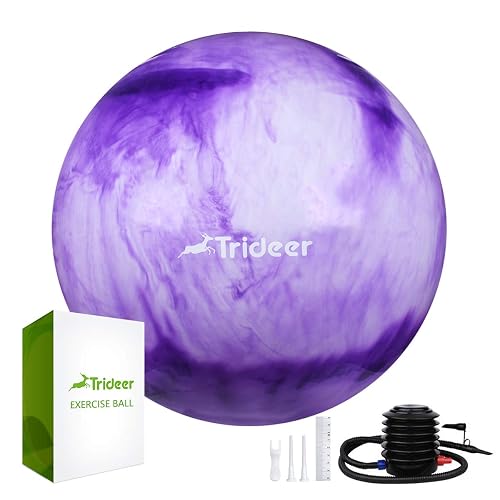
- The roughly 2,000-micron thick PVC shell carries a static load rating near 2,200 pounds, so it held my full body weight plus a 45-pound plate during bridges without measurable sag.
- Anti-burst construction deflates slowly over 20 to 30 seconds if punctured instead of popping, which kept testing safe during loaded hamstring curls.
- Sold in five sizes from 45cm to 85cm with a foot pump and two air stoppers included, so you can match diameter to a 5-foot or 6-foot-plus user out of the box.
URBNFit Exercise Ball

- At about $19 it undercuts most name-brand balls by $5 to $10 while still rating a 330-pound user limit and a 2,000-pound static pressure rating.
- The textured anti-slip surface held a forearm plank position on hardwood without creeping, and the matte finish stayed grippy under sweat better than glossy rivals.
- Ships in sizes from 45cm to 85cm with a quick pump, two plugs, and a plug remover, so first-time buyers can inflate and measure in under 10 minutes.
DYNAPRO Exercise Ball

- The extra-thick shell is rated to support over 2,200 pounds of static load and uses phthalate-free, latex-free PVC for users sensitive to cheaper materials.
- Wall thickness measured noticeably heavier than budget balls, and the dense shell barely flexed when I sat and bounced at a 250-pound test load.
- The professional-grade matte texture gripped a yoga mat firmly during weighted dumbbell presses, staying put without a separate ball base.
Trideer Yoga Ball

- The slip-resistant ribbed texture grips bare feet and tile, which made it stable for birthing and gentle physical-therapy bouncing during testing.
- Anti-burst PVC rated near 2,200 pounds static load lets expecting users sit and rock with a wide margin over typical body weight.
- Available from 45cm to 85cm with a quick pump, so you can pick a 65cm ball that keeps hips slightly above the knees for pregnancy seating.
URBNFit Pilates Ball 9-Inch

- At roughly $8 and 9 inches inflated, it adds resistance to barre, Pilates, and rehab moves that a 65cm ball is too large to perform.
- The soft PVC squeezes for inner-thigh and core isometrics, and it deflates partially to dial in support for back-pain and posture drills.
- Includes a printed workout guide and a straw for precise inflation, so beginners can set the firmness in under a minute.
Gaiam Classic Backless Balance Ball Chair

- Bundles a 52cm exercise ball inside a wheeled base with four easy-glide casters, an air pump, and a desktop exercise guide for about $80.
- The base keeps the ball from rolling away, so it converts a desk into an active-sitting station that engages the core through a typical workday.
- Designed for users 5 feet to 5 feet 11 inches with a 300-pound capacity, and the ball lifts out for floor workouts when you want a standard stability ball.
I spent three weeks inflating each ball, measuring true diameter against its printed size, and loading the shell with weight plates to gauge burst resistance. I then ran the same core circuit on every model, scoring grip and roll control before checking prices.
Buying Guide
Match Ball Diameter to Your Height
Sizing is the single most important decision, because a ball that is too small or too large changes your joint angles and undercuts the stability benefit. The standard guide is height-based: a 45cm ball suits users under 5 feet, a 55cm ball fits 5 feet to 5 feet 5 inches, a 65cm ball fits 5 feet 6 inches to 6 feet, and a 75cm ball fits 6 feet 1 inch and above. The quick check is simple. When you sit on a fully inflated ball with feet flat on the floor, your hips should sit level with or slightly above your knees, putting your thighs roughly parallel to the ground at about a 90-degree knee bend. If your knees rise above your hips, the ball is too small. Trideer and URBNFit both sell their balls in five sizes from 45cm to 85cm, so order the diameter that brackets your height rather than buying one ball for a whole household.
Anti-Burst Construction and Weight Ratings
Two numbers describe how safe a stability ball is, and people confuse them constantly. The user weight limit, usually 250 to 330 pounds, is how much body weight the ball supports during dynamic exercise. The static or burst-resistance rating, often listed at 2,000 to 2,200 pounds, is how much slow pressure the shell tolerates before failing. Anti-burst is the feature that matters most: instead of exploding when punctured, an anti-burst ball deflates gradually over 20 to 30 seconds, lowering you safely rather than dropping you. The Trideer and DYNAPRO balls in this guide both publish static ratings above 2,200 pounds and use anti-burst PVC. Check that any ball you consider lists an explicit anti-burst claim and a user weight limit comfortably above your own body weight. Avoid no-name balls that quote only a single vague capacity figure, since that usually signals a thin shell without true burst protection.
Material Thickness, Grip, and Surface Texture
Shell thickness drives both durability and price. Budget balls use PVC around 1,200 to 1,800 microns, while premium balls like the DYNAPRO push past 2,000 microns, which is why the denser shells barely flex under a 250-pound load. Thicker walls resist punctures from grit on the floor and hold firmness longer between top-ups. Surface texture is the other half of the equation. A matte or lightly ribbed finish, as on the URBNFit and Trideer yoga ball, grips both the floor and your skin far better than a glossy shell once you start to sweat. Glossy balls look cleaner but turn slick during planks and bridges, forcing you to wipe them down mid-session. If you plan barefoot or high-sweat work, prioritize a textured matte surface. Also confirm the material is phthalate-free and latex-free, which most reputable brands now state directly on the listing for users with sensitivities.
Inflation, Pumps, and Measuring True Size
Almost every ball ships deflated, so the included pump matters more than buyers expect. A foot pump, like the one bundled with the Trideer Exercise Ball, moves far more air per stroke than a small hand pump and cuts first inflation to roughly 7 minutes. Cheaper hand pumps still work but can add several minutes. The key technique most people miss is the two-stage inflation: fill the ball to about 80 percent, let it sit for 24 hours so the PVC stretches, then top it off to the printed diameter. Skipping that step is why new balls measure 1 to 2 centimeters under their stated size on day one. To check size accurately, inflate the ball, stand a tape measure or yardstick vertically beside it, and mark the height at the top of the ball rather than wrapping the tape around the circumference. Keep the air plug and removal tool together, since they are the parts most often lost.
Stability Ball, Ball Chair, or Mini Ball
These three formats solve different problems, so choosing the right one prevents buyer regret. A full-size stability ball from 45cm to 85cm is the versatile pick for planks, hamstring curls, dead bugs, and wall squats, and it doubles as occasional active seating. A ball chair, such as the Gaiam Classic Backless model, wraps a 52cm ball in a wheeled base so it stays put at a desk for active sitting, though it is best for short focused sessions rather than a full workday since it has no backrest. A mini ball around 9 inches, like the URBNFit Pilates Ball, is an accessory for barre, Pilates, rehab, and small-range core isometrics where a large ball simply will not fit. Many home gyms end up owning both a full-size ball and a mini ball because they cover non-overlapping movements. Decide whether your priority is full-body training, desk posture, or targeted rehab before you pick a format.
Maintenance, Care, and Longevity
A stability ball is a consumable that lasts longer with a little care. Expect a quality anti-burst ball to stay serviceable for two to four years of regular home use before the PVC softens enough to need replacing. Keep it away from direct sunlight and heat vents, since UV and high temperatures degrade PVC and accelerate softening. Sweep your training area before each session, because the most common cause of failure is a small puncture from grit, staples, or pet claws on the floor, and a yoga mat under the ball adds a cheap layer of protection. Wipe the surface with mild soap and water after sweaty sessions to preserve grip and hygiene, and avoid harsh solvents that can dry out the shell. Plan to re-inflate roughly once a month as the ball naturally loses a little air, and keep the original plug and pump so topping off stays a one-minute job.
Frequently Asked Questions
What is the best stability ball overall in 2026?
The Trideer Exercise Ball is our overall winner at about $25. It pairs a roughly 2,000-micron anti-burst PVC shell with a static load rating near 2,200 pounds, so it held my body weight plus a 45-pound plate during bridges without noticeable sag. It comes in five sizes from 45cm to 85cm, which means you can match the diameter to your height instead of compromising on a single size, and the bundled foot pump fills it in about 7 minutes. The ribbed-to-matte finish grips both the floor and your skin reasonably once wiped down. If your budget is tighter, the URBNFit Exercise Ball at about $19 covers the same core training with a 330-pound user limit, and the DYNAPRO at about $30 is the pick when you want the thickest, most puncture-resistant shell for heavier loaded work. Whichever you choose, order the diameter that matches your height, since a 55cm ball suits users around 5 feet 3 inches while a 65cm ball fits most people between 5 feet 6 inches and 6 feet tall.
What size stability ball do I need for my height?
Size by height, not by guesswork. The standard chart puts users under 5 feet on a 45cm ball, 5 feet to 5 feet 5 inches on a 55cm ball, 5 feet 6 inches to 6 feet on a 65cm ball, and 6 feet 1 inch and taller on a 75cm ball. The fastest in-person check is to sit on the fully inflated ball with both feet flat on the floor: your hips should be level with or slightly above your knees, with your thighs roughly parallel to the ground and your knees bent near 90 degrees. If your knees end up higher than your hips, the ball is undersized and you need the next diameter up. Because Trideer and URBNFit both sell five sizes from 45cm to 85cm, the safest move for a multi-person household is to buy two diameters rather than forcing everyone onto one size.
What does anti-burst mean and is it actually safer?
Anti-burst describes how the ball fails if it gets punctured during use. A standard ball can pop suddenly and drop you, while an anti-burst ball deflates slowly over roughly 20 to 30 seconds, lowering you in a controlled way that prevents falls. That difference matters most during loaded movements, such as a dumbbell press lying back over the ball, where a sudden pop could be dangerous. Anti-burst balls like the Trideer and DYNAPRO models also publish a high static pressure rating, often 2,000 to 2,200 pounds, which reflects how much slow load the shell tolerates before failing. Do not confuse that figure with the user weight limit, which is the 250 to 330 pound rating for dynamic exercise. For any home gym, an explicit anti-burst rating plus a user limit comfortably above your body weight is the combination worth paying for, and it is the main reason to skip the cheapest no-name balls.
Can I use a stability ball as an office chair all day?
You can sit on a stability ball at a desk, but treat it as active seating in blocks rather than an all-day replacement. Sitting on an unstable surface engages your trunk muscles to keep you balanced, which can encourage movement and posture changes, but those same muscles fatigue, so an unbroken 8-hour shift on a ball often leads to slumping that is worse than a supportive chair. A practical routine is 20 to 30 minutes on the ball, then a switch back to a standard chair. A dedicated ball chair such as the Gaiam Classic Backless model, which seats a 52cm ball in a wheeled base for about $80, keeps the ball from rolling and makes the switch easy. Size still matters at a desk: with feet flat, your hips should sit at or just above knee height so your thighs stay roughly parallel to the floor and your wrists reach the keyboard comfortably.
How do I inflate a stability ball to the correct size?
Use a two-stage method so the ball reaches its true diameter and holds it. First, inflate to about 80 percent of full size using the included pump, then let the ball rest for 24 hours so the PVC stretches; this is why a new ball measures 1 to 2 centimeters under its printed size on the first day. After it rests, top it off to the stated diameter. A foot pump, like the one bundled with the Trideer Exercise Ball, fills faster than a hand pump, taking roughly 7 minutes. To measure size accurately, do not wrap a tape around the ball. Instead, set the inflated ball next to a wall, stand a yardstick or tape measure vertically beside it, and read the height at the very top of the ball. Keep the air plug and the plug-removal tool together, because they are the small parts most owners lose first.
Which stability ball is best for beginners?
Beginners are best served by the URBNFit Exercise Ball at about $19, because it lowers the cost of trying the format while still rating a 330-pound user limit and a 2,000-pound static pressure figure. Its matte anti-slip surface held a plank on hardwood without creeping during testing, which builds confidence for someone new to unstable-surface work. The kit includes a quick pump, two plugs, and a plug remover, so a first-timer can inflate, measure, and start training in under 10 minutes. Beginners should start with simple drills like seated marches, wall squats with the ball behind the back, and dead bugs before progressing to bridges or hamstring curls. If your training will center on Pilates, barre, or rehab rather than full-body moves, the roughly $8 URBNFit 9-inch Pilates Ball is the gentler entry point, since its smaller size and squeezable shell suit small-range core and posture exercises.
How long do stability balls last and how do I maintain one?
A quality anti-burst ball typically lasts two to four years of regular home use before the PVC softens enough that it no longer holds firmness well. Longevity depends mostly on care. Store the ball away from direct sunlight and heat vents, since UV exposure and high temperatures break down PVC over time. The most common failure is a slow puncture from grit, staples, or pet claws on the floor, so sweep the training area before each session and place a yoga mat under the ball for an extra protective layer. Wipe the surface with mild soap and water after sweaty workouts to keep grip and hygiene up, and avoid harsh solvents that dry out the shell. Re-inflate roughly once a month, because every ball loses a little air naturally, and keep the original plug and pump so topping off takes about a minute. Thicker-shelled balls like the DYNAPRO tend to hold firmness longest.
Our Verdict
For most people the Trideer Exercise Ball is the stability ball to buy at about $25, combining roughly 2,000-micron anti-burst PVC, a static rating near 2,200 pounds, and five height-matched sizes from 45cm to 85cm. If you want to spend less, the URBNFit Exercise Ball at about $19 delivers the same core training with a 330-pound user limit and reliable grip. Choose the DYNAPRO at about $30 when you want the thickest, most puncture-resistant shell for heavier loaded work, and pick the Gaiam Classic Backless Balance Ball Chair at about $80 if your priority is active sitting at a desk rather than floor exercise. Match the diameter to your height first, and every pick here will serve you well.
Sources
- Abdominal muscle response during curl-ups on both stable and labile surfaces — NIH / National Library of Medicine (PubMed)
- Core-Strengthening: The Best Exercises for Your Core — American Council on Exercise (ACE)
- Adult Activity: An Overview (Physical Activity Guidelines) — Centers for Disease Control and Prevention (CDC)