A smart water shutoff valve does what a leak detector cannot: it physically closes your plumbing when something goes wrong. A leak sensor on the floor sounds an alarm and sends a phone alert, but if you are at work or asleep it still depends on you to run for the main shutoff. A smart shutoff valve removes that gap by turning the water off automatically, which is the difference between a puddle and a flooded basement. This guide covers the category that actively stops the water, distinct from the leak sensors we ranked separately. These devices come in two designs. An inline monitoring valve like the Flo by Moen is plumbed into the main line and watches flow rate, pressure, and temperature every second, so it can spot a slow pinhole leak hidden inside a wall and close on its own through pure flow analysis. A clamp-on actuator such as the Guardian by Elexa, the Zooz Titan, or the JYVY POWER controller mounts over an existing quarter-turn ball valve and snaps it shut when a wireless leak sensor trips. Monitoring valves give the broadest coverage but cost more and usually need a plumber, while actuators install in about ten minutes with a screwdriver and react only to leaks a sensor physically detects. We ranked six devices spanning both designs and three price tiers, from the $499 Flo by Moen down to a $54.99 self-contained Wi-Fi valve. We weighed how each detects trouble, what pipe size and valve type it needs, whether it requires a hub or subscription, and how it behaves during a power loss. Every product was confirmed live and in stock on Amazon at publication. The Flo by Moen earned Best Overall, but five other picks suit DIY installs, specific smart-home ecosystems, and tighter budgets.
Key Takeaways
- The Flo by Moen 3/4-inch valve leads our list at $499, installing inline on the main to monitor flow, pressure, and temperature and run a nightly MicroLeak test that closes the valve on its own during a burst.
- Best no-plumber whole-home kit is the Guardian by Elexa at $399, a motorized actuator that clamps over an existing ball valve and ships with a hub and three wireless leak sensors plus battery backup.
- The Zooz Titan ZAC36 at $69.95 brings hub-controlled shutoff to Z-Wave homes like Hubitat, Home Assistant, and SmartThings for under seventy dollars.
- The JYVY POWER Zigbee controller at $59.99 covers SmartThings and Tuya setups, while the self-contained Smart WiFi valve at $54.99 is the cheapest no-hub inline option.
- Inline monitoring valves catch hidden in-wall leaks through flow analysis; clamp-on actuators only react once water reaches a sensor puck, so many homes run both layers together.
Top Picks
Flo by Moen 3/4-inch Smart Water Shutoff Valve
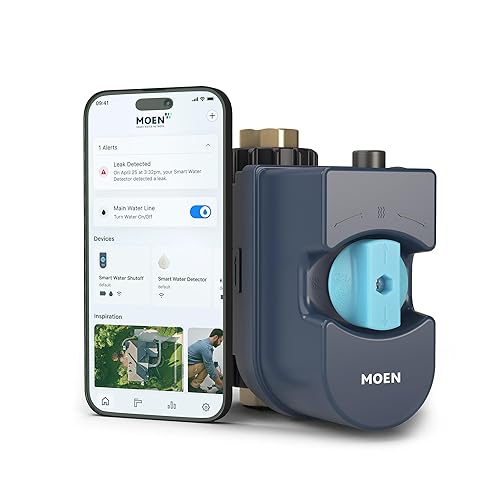
- Installs inline on the 3/4-inch main and continuously measures flow rate, pressure, and temperature to catch leaks no point sensor can see
- Runs an automatic nightly MicroLeak test that pressurizes the home plumbing and flags drips as small as one drop per minute
- Closes the motorized ball valve on its own when a catastrophic burst or a long abnormal run is detected, with no human needed
Guardian by Elexa Leak Prevention System

- Motorized valve actuator clamps over your existing quarter-turn ball valve, so installation needs no pipe cutting and no plumber
- Ships as a complete starter kit with a hub and three wireless leak sensors that trigger a full main-line shutoff in seconds
- Onboard battery backup keeps the system armed and able to close the valve during a power outage
Zooz Titan ZAC36 Z-Wave Water Valve Actuator
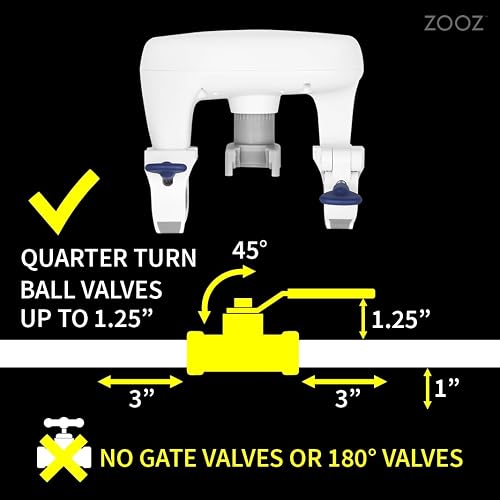
- Z-Wave Long Range 700 series radio reaches across large homes and reports valve position back to the hub in real time
- Strap-on actuator drives any 1/2-inch to 1.5-inch quarter-turn ball valve, so it retrofits onto plumbing you already have
- Integrates with Hubitat, Home Assistant, SmartThings, and the Zooz Z-Box for fully local leak-triggered automations
JYVY POWER Zigbee Smart Water Shutoff Valve Controller

- Zigbee 3.0 manipulator pairs with SmartThings and Tuya hubs and joins leak sensors into a single shutoff routine
- Clamp-on bracket grips an existing ball valve handle, so the whole install is hand-tightened with no plumbing work
- Built-in knob turns the valve manually whenever you want to bypass the automation or test the travel
WiFi & Bluetooth Motorized Smart Valve Actuator

- Dual 2.4 GHz Wi-Fi and Bluetooth radios connect straight to the app with no hub or bridge to buy
- Motor head mounts onto a standard quarter-turn ball valve and turns it open or closed on command
- App schedules and timers can close the water automatically while you are away on vacation
Smart WiFi Water Valve with Alexa and Google Control

- Self-contained motorized valve threads directly into the line, so there is no separate ball valve to source
- Connects over 2.4 GHz Wi-Fi with no hub and is controlled from the phone app anywhere with a signal
- Pairs with Amazon Alexa and Google Assistant for voice shutoff and supports scheduled open and close times
I evaluated each device against the specifications that decide real-world protection: detection method, pipe and valve compatibility, hub and subscription requirements, battery backup, and fail-state behavior on power loss. I cross-checked manufacturer specs against owner-reported reliability and confirmed live Amazon stock, then scored every model before weighing price against the water damage it prevents.
Buying Guide
Monitoring Valves vs. Sensor-Triggered Actuators
Smart shutoff devices split into two designs. A monitoring valve like the Flo by Moen 3/4-inch unit installs inline on the main and watches flow rate, pressure, and temperature every second. Because it sees the water itself, it can spot a hidden pipe leak inside a wall through abnormal flow patterns and an automatic nightly pressure test, then close on its own. A sensor-triggered actuator such as the Guardian by Elexa system, the Zooz Titan, or the JYVY POWER controller does not watch flow. It clamps onto an existing ball valve and waits for a wireless leak sensor to detect water on a floor, then snaps the valve shut. Monitoring valves give the broadest protection but cost more and need professional installation. Actuators are cheaper and install without a plumber, but they only react to leaks that physically reach a sensor puck. Many homeowners run a monitoring valve on the main and scatter sensors as a second layer.
Pipe Size and Where the Valve Mounts
Every shutoff device is tied to the size of your main line, which is usually 3/4-inch or 1-inch copper, PEX, or CPVC in a typical single-family home. The Flo by Moen ships in 3/4-inch, 1-inch, and 1.25-inch versions, so match the model to your pipe diameter before buying. Clamp-on actuators like the Zooz Titan handle a range of roughly 1/2-inch to 1.5-inch quarter-turn ball valves, but they require that a modern ball valve already exists on the main. Homes with an older gate valve or a stuck shutoff need a plumber to swap in a quarter-turn ball valve first. Measure the pipe, confirm the valve type, and check that there is at least a few inches of clearance around the shutoff for the motor head before you order anything.
DIY Install vs. Professional Plumbing
Installation effort separates these products as much as price does. Inline monitoring valves cut into the main water line, so the Flo by Moen and any self-contained inline valve such as the budget WiFi unit need the water drained, the pipe cut, and fittings soldered or clamped. Most people hire a licensed plumber for that, adding roughly $200 to $400. Clamp-on actuators are the opposite. The Guardian by Elexa, Zooz Titan, JYVY POWER, and the Wi-Fi and Bluetooth motorized head all mount over an existing ball valve with a thumbscrew or strap in about ten minutes using a screwdriver. If you rent, lack plumbing experience, or want to take the system with you when you move, a clamp-on actuator is the practical path. If you want the deepest leak coverage and plan to stay put, the inline monitoring valve earns its installation cost.
Smart Home Ecosystem and Hub Requirements
Match the device to the platform you already run. The Flo by Moen and the self-contained Wi-Fi valves connect over 2.4 GHz Wi-Fi with no hub and work with Amazon Alexa and Google Assistant out of the box. The Zooz Titan speaks Z-Wave and needs a Z-Wave hub such as Hubitat, Home Assistant, or a SmartThings hub to function at all. The JYVY POWER controller uses Zigbee and pairs with a SmartThings or Tuya hub. Hub-based devices unlock powerful local automations, like closing the valve the instant any sensor in the house trips, and they keep working when the internet drops. Wi-Fi devices are simpler to set up but depend on the cloud and your router. Decide whether you want the deep local control of a hub system or the plug-and-play convenience of Wi-Fi before you choose.
Battery Backup, Manual Override, and Power Loss
A shutoff valve is only useful if it can act when you need it, including during a power failure or a dead network. Look for battery backup so the system stays armed when the lights go out; the Guardian by Elexa kit includes it, and several actuators accept backup cells. Just as important is a manual override. The Zooz Titan and JYVY POWER controllers keep a physical lever or knob so you can open and close the valve by hand without uninstalling the motor, which matters during plumbing repairs or a controller fault. Check how each device behaves on power loss too. A valve that fails open leaves you exposed, while one that holds its last position or fails closed protects the home. Read the spec sheet for fail-state behavior and backup options rather than assuming every model handles an outage the same way.
Total Cost, Subscriptions, and Water-Damage Value
Hardware price is only part of the math. The Flo by Moen sits near $499 plus installation, and its optional FloProtect plan runs a monthly fee that adds predictive alerts and a water-damage deductible reimbursement. Clamp-on actuators like the Zooz Titan and JYVY POWER cost under seventy dollars and carry no subscription, though you add leak sensors separately. Weigh those numbers against what a single burst supply line can cost. A failed washing-machine hose or a cracked pipe can release hundreds of gallons an hour and cause thousands of dollars in flooring, drywall, and mold remediation. Many home insurers now offer a premium discount for an automatic shutoff device, which can offset part of the purchase over a few years. For most homeowners the device pays for itself the first time it stops a leak that would otherwise have run unnoticed for hours.
Frequently Asked Questions
What is the best smart water shutoff valve overall?
For whole-home protection, the Flo by Moen 3/4-inch Smart Water Shutoff Valve is the strongest overall pick in this roundup. Unlike the clamp-on actuators, it installs inline on your main water line and continuously measures flow rate, pressure, and temperature, which lets it detect problems no surface sensor can see, including a slow pinhole leak hidden inside a wall. Every night it runs an automatic MicroLeak test that pressurizes your plumbing and flags drips as small as a single drop per minute. When it detects a catastrophic burst or an abnormally long run of water, it closes its motorized valve on its own with no person involved. It also connects to Amazon Alexa and Google Assistant and offers the optional FloProtect plan for deeper analytics and a water-damage deductible reimbursement. The trade-off is that it needs a licensed plumber to install and costs more than an actuator. If you want the widest leak coverage and plan to stay in your home, it earns that premium. Renters and people who want a ten-minute install should look at a clamp-on actuator instead.
What is the difference between a leak detector and a smart shutoff valve?
A smart leak detector and a smart shutoff valve do related but different jobs, and understanding the split prevents a costly gap in coverage. A leak detector is a sensor. It sits on the floor under a sink, behind a toilet, or near a water heater and sounds an alarm or sends a phone alert the moment its contacts touch water. It tells you a leak is happening, but it cannot stop the water. A smart shutoff valve actually closes your plumbing. Products like the Flo by Moen close the main line themselves based on flow analysis, while actuator models such as the Guardian by Elexa, the Zooz Titan ZAC36, and the JYVY POWER controller close an existing ball valve when a paired leak sensor trips. The most robust setup combines both layers: shutoff hardware on the main to stop a major burst, plus inexpensive detectors scattered at every appliance so a localized drip is caught and the valve is closed before the water spreads. A detector alone leaves you depending on being home and awake to react.
Can I install a smart water shutoff valve myself or do I need a plumber?
It depends entirely on which type you choose, and this is the single biggest practical difference between the products here. Inline monitoring and inline valves cut directly into your main water line. The Flo by Moen 3/4-inch valve and the self-contained budget Wi-Fi valve both require draining the system, cutting the pipe, and soldering or clamping fittings, so most homeowners hire a licensed plumber and budget roughly $200 to $400 for the work. Clamp-on actuators are genuinely do-it-yourself. The Guardian by Elexa kit, the Zooz Titan ZAC36, the JYVY POWER controller, and the Wi-Fi and Bluetooth motorized actuator all mount over an existing quarter-turn ball valve with a thumbscrew or strap, and the whole job takes about ten minutes with a screwdriver and no special skills. The one catch is that an actuator needs a modern ball valve already on the main. If your home still has an older gate-style shutoff, a plumber has to swap in a quarter-turn ball valve before any clamp-on actuator will fit.
Do smart water shutoff valves need a hub or subscription to work?
Hub and subscription requirements vary by model, so check both before buying. On the hub question, the Flo by Moen and the self-contained Wi-Fi valves connect over 2.4 GHz Wi-Fi with no hub and pair directly with Amazon Alexa and Google Assistant. The Zooz Titan ZAC36 needs a Z-Wave hub such as Hubitat, Home Assistant, or SmartThings, and the JYVY POWER controller needs a Zigbee hub like a SmartThings or Tuya bridge; neither runs on its own. Hub-based systems reward you with local automations that fire instantly and keep working when the internet drops. On subscriptions, none of these devices charge a mandatory fee for core shutoff. The Flo by Moen works fully without paying, but its optional FloProtect plan adds predictive monitoring, longer usage history, and a water-damage deductible reimbursement for a monthly cost. The clamp-on actuators carry no subscription at all. Decide whether you value the deep local control of a hub and the extra insurance-style perks of a paid plan, or prefer the simplest no-fee, no-hub Wi-Fi setup.
What is the best budget smart water shutoff option?
If price is the deciding factor, you have two solid low-cost routes, and both come in well under the premium monitoring valves. The Smart WiFi Water Valve at around $55 is the cheapest path because it is a self-contained motorized valve that threads into the line and connects straight to Wi-Fi with no hub and no separate ball valve to buy. It gives you app and voice shutoff plus schedules for the lowest entry price in this roundup. The other strong value pick is the Zooz Titan ZAC36 at about $70, which is the smartest choice if you already own a Z-Wave hub. It clamps onto an existing ball valve, needs no plumbing, and plugs into powerful local automations so any leak sensor in the house can close the main. The JYVY POWER Zigbee controller fills the same role near $60 for SmartThings and Tuya households. The catch with the cheaper actuators is that they are hardware-only: you supply the ball valve and the leak sensors. Even so, a $55 to $70 device that closes your water is far cheaper than the damage one burst pipe causes.
Will a smart water shutoff valve stop a burst pipe while I am away?
Stopping a burst while you are away is exactly what these systems are built for, and it is their biggest advantage over a plain leak detector. A monitoring valve like the Flo by Moen does this best because it watches flow continuously and acts autonomously: if a supply line lets go and water runs far longer or faster than your normal usage pattern, the valve closes itself within seconds without waiting for you to see an alert. Actuator systems such as the Guardian by Elexa, the Zooz Titan, and the JYVY POWER controller also protect an empty house, but only through a linked leak sensor or a hub automation. The instant a sensor on the floor detects water, the hub commands the valve shut. To rely on this while traveling, confirm two things before you leave. First, make sure the device has battery backup or a known power-loss behavior so an outage during a storm does not disarm it. Second, place leak sensors at every high-risk point, since an actuator can only respond to a leak that a sensor actually detects. With those covered, the system can shut the main and turn a flood into a puddle while you are gone.
How much can a smart water shutoff valve save on water damage and insurance?
The financial case for a smart shutoff valve rests on avoided damage and possible insurance savings, and for most homes it is compelling. A burst washing-machine hose or a cracked supply line can release hundreds of gallons per hour, and an undetected leak that runs for a full day while you are at work or on vacation routinely causes thousands of dollars in ruined flooring, soaked drywall, and mold remediation that often is not fully covered. By closing the main automatically, a device like the Flo by Moen or a sensor-linked actuator such as the Guardian by Elexa turns that disaster into a minor cleanup. On the insurance side, a growing number of carriers now offer a premium discount, sometimes five to fifteen percent on the water-damage portion, when you install an automatic shutoff, and some smart valve makers partner directly with insurers. Call your provider, ask about a discount and any approved device list, and weigh it against the hardware cost. Between the discount and a single prevented flood, a shutoff valve typically pays for itself faster than almost any other home upgrade.
Our Verdict
The Flo by Moen 3/4-inch Smart Water Shutoff Valve is our best overall pick at $499, because inline flow, pressure, and temperature monitoring plus a nightly MicroLeak test let it catch hidden leaks no surface sensor can see and close the main on its own. If you want whole-home protection without cutting a pipe, the Guardian by Elexa at $399 is the best DIY kit, clamping over an existing ball valve and shipping with a hub, three leak sensors, and battery backup. Smart-home owners on a budget should match the radio: the Zooz Titan ZAC36 at $69.95 is the value choice for Z-Wave hubs, and the JYVY POWER controller near $60 covers Zigbee SmartThings and Tuya setups. For the cheapest self-contained option, the $54.99 Smart WiFi valve threads straight into the line with no hub. Match the design to your plumbing, ecosystem, and whether you can stay put for an inline install.
Sources
- Statistics and Facts: Fix a Leak Week — U.S. EPA WaterSense
- Facts + Statistics: Homeowners and renters insurance — Insurance Information Institute
- Use of Lead Free Pipes, Fittings, Fixtures, Solder, and Flux for Drinking Water — U.S. EPA