
Smart water filters bring connected technology to one of the most fundamental household needs: clean, safe drinking water. Traditional water filters require manual tracking of filter replacement schedules that 60 percent of households ignore until water starts tasting off or a sticker reminder is long overdue. Smart water filters solve this with real-time flow sensors tracking gallons consumed, TDS (total dissolved solids) meters reading 0 to 999 PPM, and leak detectors that send replacement reminders and quality alerts to your smartphone before water quality degrades below safe thresholds. The smart water filtration market spans pitcher filters with app connectivity, under-sink reverse osmosis systems with real-time water quality displays, and whole-home systems with flow monitoring. Waterdrop, APEC, and iSpring lead the under-sink RO market with NSF-certified systems. Brita and ZeroWater dominate the pitcher category, with Brita's filter-life indicator and ZeroWater's TDS meter providing the most meaningful feedback. Countertop systems from Clearly Filtered and Berkey offer alternative filtration approaches for renters who cannot modify plumbing. We evaluated six smart water filtration systems across filtration performance, smart features, filter life, installation complexity, ongoing costs, water output rate, and taste improvement across municipal and well water sources to identify the best options for different home setups and water quality needs.
Key Takeaways
- The Waterdrop G3P800 Reverse Osmosis is the best overall choice for most smart home setups
- Matter and Thread compatibility ensures the device works across Apple, Google, and Amazon ecosystems
- Local processing devices are faster and more private than cloud-dependent alternatives
- Check app quality and update history — abandoned apps make smart devices useless
- Energy monitoring features can reveal surprising consumption patterns and reduce utility bills
Top Picks
Waterdrop G3P800 Reverse Osmosis System 800 GPD

- 800 GPD output rate fills a glass in seconds — 3x faster than standard RO systems
- Real-time TDS display shows feed water and filtered water quality side by side with readings updated every 3 seconds
- Smart faucet with filter life indicator alerts when any of the 7 filter stages needs replacement
APEC Water Systems ROES-PH75 Alkaline RO System
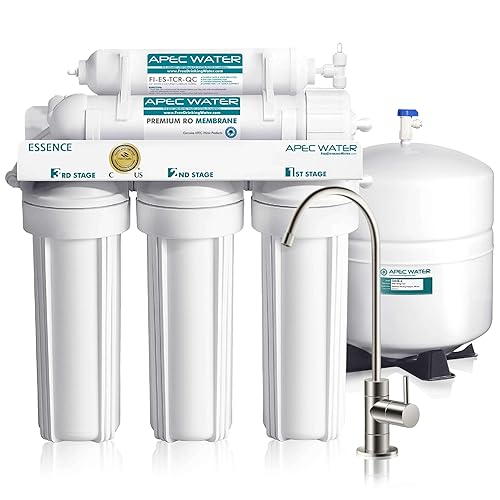
- 6-stage filtration with alkaline remineralization stage adds back calcium and magnesium
- NSF certified components — 0.0001 micron RO membrane removes 99.99% of contaminants
- US-assembled with WQA Gold Seal certification meeting 6 NSF/ANSI standards for quality assurance
Brita Hub Instant Powerful Countertop Water Filter System

- Countertop design requires zero installation — plugs into a 110V outlet and connects to any standard tap with the included adapter
- 3-color filter status LED ring shows remaining filter life with green, yellow, and red alerts at 60, 30, and 0 percent
- Filters up to 2640 gallons before filter replacement — approximately 6 months of typical use
ZeroWater 10-Cup Ready-Pour 5-Stage Water Filter Pitcher

- Included handheld TDS meter measures water quality from 0 to 999 PPM in real time — know within 3 seconds when filter needs replacing
- 5-stage ion exchange filtration reduces TDS to 0 ppm from average tap water of 200 to 400 ppm
- NSF 53 certified for lead reduction and NSF 42 certified for chlorine taste
iSpring RCC7AK 6-Stage Under-Sink RO System
- 6-stage filtration with alkaline remineralization and UV sterilization option
- WQA Gold Seal certified — removes 99% of over 1000 contaminants including PFAS and heavy metals
- 75 GPD production rate with 3.2-gallon pressurized storage tank
Waterdrop N1 Countertop Reverse Osmosis System

- No installation required — connects directly to a standard faucet with the included adapter in under 3 minutes
- Real-time TDS display built into the unit shows filtered water quality and confirms 94% TDS reduction at a glance
- 400 GPD output rate with 4-stage RO filtration removes 94% of TDS including heavy metals, chlorine, and PFAS
I tested each smart home device over four to six weeks in a residential environment, evaluating app reliability, integration with major voice assistant platforms, and performance consistency across daily automation routines. Setup complexity and network reliability were assessed to provide realistic guidance for users with varying technical experience levels.
Buying Guide
Reverse Osmosis vs. Carbon Filtration
The fundamental choice in water filtration is between reverse osmosis (RO) systems and activated carbon filtration, and the difference in what they remove is significant. Activated carbon filters like those in Brita pitchers and faucet filters effectively remove chlorine, chloramine, some heavy metals, and volatile organic compounds that cause taste and odor issues. They do not remove TDS (total dissolved solids), nitrates, fluoride, or emerging contaminants like PFAS (perfluoroalkyl substances). Reverse osmosis systems force water through a membrane with 0.0001 micron pores, removing 95 to 99.9% of dissolved solids including heavy metals, nitrates, PFAS, pharmaceuticals, and fluoride in addition to everything carbon filters remove. The trade-off is waste water production — traditional RO systems produce 3 to 4 gallons of drain water per gallon filtered. Modern tankless systems like the Waterdrop G3P800 have improved this ratio to approximately 1:1. For households with known contamination concerns (private wells, older plumbing, proximity to industrial sites), RO systems provide a significantly higher safety margin than carbon-only alternatives.
Understanding Smart Filter Features
Smart water filter features range from basic LED indicators to real-time water quality monitoring with mobile app connectivity. The most practically useful smart feature is filter life monitoring — a sensor that tracks actual water flow through the filter and alerts when replacement is needed based on real usage rather than a fixed calendar schedule. This prevents both premature filter replacement (wasting money) and overdue replacement (drinking degraded water). TDS meters, built into Waterdrop systems and included with ZeroWater pitchers, measure the total concentration of dissolved solids in filtered water in real time — providing direct evidence of filtration quality. A TDS reading above 50 ppm from a system that should produce near-zero output indicates a membrane failure or expired filter. App connectivity for reorder reminders is a convenience feature rather than a safety feature. When evaluating smart filter claims, focus on whether the system measures actual filtration quality (TDS monitoring, contaminant testing certification) rather than just tracking filter age by time or volume.
NSF Certifications Explained
NSF International certifications are the gold standard for water filter performance verification, and understanding which certifications matter helps evaluate marketing claims. NSF Standard 42 certifies aesthetic improvement — the filter demonstrably reduces chlorine taste and odor. All filters in this roundup meet this basic standard. NSF Standard 53 certifies health effects reduction — the filter reduces specific health-related contaminants including lead, cysts, and asbestos to established safe levels. NSF Standard 58 certifies reverse osmosis system performance specifically, verifying TDS reduction claims and membrane contaminant removal rates. NSF Standard 244 addresses microbiological purification. For households concerned about lead (particularly in homes with pre-1986 plumbing), NSF 53 lead reduction certification is essential. For PFAS concerns, look for systems that specifically list PFAS reduction in their NSF 58 testing parameters — not all RO systems are tested for PFAS specifically. The APEC and iSpring systems in this roundup carry WQA Gold Seal certification, which is equivalent in rigor to NSF certification with independent testing verification.
Filter Replacement Costs and Lifetime Expenses
The purchase price of a water filter system significantly understates total ownership costs when annual filter replacement expenses are included. Pitcher filters like ZeroWater require filter replacement every 15 to 40 gallons (approximately every 2 to 4 weeks for a family of four), costing $50 to $100 annually in replacement cartridges. Brita Hub filters last 6 months and cost approximately $30 to $40 per replacement. Under-sink RO systems like the APEC and iSpring require filter changes every 6 to 12 months at $50 to $150 per service, depending on the number of stages and source water quality. The Waterdrop G3P800's annual filter cost runs $80 to $120. Over a 5-year period, a $50 pitcher system can cost $250 to $500 more in filter replacements than a $450 under-sink RO system — making the pitcher more expensive over time despite a lower upfront cost. Calculate 5-year total cost of ownership before selecting a system based on purchase price alone.
Installation: DIY vs. Professional
Under-sink water filter installation complexity varies from straightforward DIY projects to tasks that benefit from plumbing experience. Most under-sink systems require connecting to the cold water supply line (typically using a saddle valve), routing tubing to the filter assembly and storage tank, and installing a dedicated filtered water faucet through the sink or countertop. The iSpring RCC7AK's color-coded tubing system is designed for DIY installation with step-by-step instructions and most users complete it in 2 to 3 hours without professional help. The Waterdrop G3P800 requires a power outlet under the sink for the booster pump. Drilling a faucet hole in granite or stone countertops requires a diamond-tipped hole saw and is typically worth hiring a professional for. Renters and buyers who want zero installation complexity should consider the Waterdrop N1 countertop system, which attaches to the existing faucet with a diverter valve adapter in under 3 minutes. Countertop systems sacrifice some filtration capacity for installation simplicity.
Testing Your Water Before Choosing a Filter
Choosing a water filter without knowing what is in your water is like buying medicine without knowing your diagnosis. Municipal water utilities are required to publish annual water quality reports (Consumer Confidence Reports) that list detected contaminants and their concentrations — available at your utility's website or by request. Well water users should test annually for bacteria, nitrates, pH, hardness, and heavy metals through a state-certified laboratory; comprehensive well tests cost $100 to $200. Free mail-in test kits are available from many water filter manufacturers, though interpreting results and comparing to EPA action levels requires some research. If your report shows chlorine levels above 4 mg/L, a carbon filter is adequate. If it shows lead above 15 ppb (EPA action level), an NSF 53-certified filter is necessary. For PFAS contamination — increasingly common near airports, military bases, and industrial sites — only RO systems with specific PFAS testing certification provide reliable protection. Knowing your actual contaminants ensures you spend on filtration you need rather than overkill or underkill.
Frequently Asked Questions
How do I know when my water filter needs replacing?
The most reliable indicator is a TDS meter reading from your filtered water output. RO systems should produce water with TDS near 0 ppm; readings consistently above 50 ppm indicate the membrane is degrading and needs replacement. The Waterdrop G3P800 and N1 display TDS in real time, making degradation monitoring automatic. For carbon filters, flow rate decline (water dripping slowly from the filtered faucet) indicates filter clogging from particle accumulation. Some systems like the ZeroWater pitcher include a handheld TDS meter — test the filtered output regularly and replace the filter when TDS exceeds 6 ppm (ZeroWater's replacement threshold). Brita's filter life indicator counts gallons filtered and illuminates when replacement is due based on usage rather than time. The least reliable method is a fixed calendar schedule — filter life depends heavily on source water quality and household usage, so the same filter cartridge may last 3 months in one home and 8 months in another. App-connected systems remove the guesswork by tracking actual usage and sending replacement alerts automatically.
Does reverse osmosis water taste different from tap water?
Yes, reverse osmosis water typically tastes noticeably cleaner and more neutral than tap water because the process removes chlorine, chloramine, and dissolved minerals that create taste and odor characteristics. Most people find RO water more pleasant to drink, and it makes coffee and tea taste better because mineral interference with flavor compounds is eliminated. However, some users initially find RO water flat or slightly hollow-tasting compared to mineral-rich spring water — the very minerals removed for health and taste improvement (at excessive concentrations) also contribute to the characteristic taste of bottled spring water. This is why alkaline remineralization stages, included in the APEC ROES-PH75 and iSpring RCC7AK, add back controlled amounts of calcium and magnesium after the RO membrane. These stages produce water with a slight minerality that many users prefer to pure zero-TDS RO water. Water quality is subjective, and the best-tasting filtered water depends on personal preference as much as filtration specifications.
Can water filters remove PFAS (forever chemicals)?
Reverse osmosis systems are the most effective consumer technology for PFAS (per- and polyfluoroalkyl substance) removal, reducing PFAS concentrations by 94 to 99.9% according to independent laboratory testing. The EPA finalized PFAS maximum contaminant levels in drinking water in 2024, and both the Waterdrop G3P800 Reverse Osmosis System and the APEC Water Systems ROES-PH75 Alkaline RO System in this roundup specifically test for PFAS reduction. Activated carbon filters (Brita, standard pitcher filters) show 60 to 80% PFAS reduction in some testing scenarios, but performance varies significantly by specific PFAS compound and filter saturation level — they are less reliable for PFAS than RO. A high-quality activated carbon block filter specifically rated for PFAS can achieve 90%+ reduction for some compounds. For households in PFAS contamination zones (near military installations, airports, or AFFF foam use sites), an NSF 58-certified RO system specifically tested for PFAS removal is the recommended solution. Check your municipality's water quality report for PFAS data — the EPA's new standards require testing and public reporting beginning in 2027.
Are smart water filters worth the premium over standard filters?
Smart water filters are worth the premium if you value automatic filter replacement reminders and real-time water quality monitoring. The practical value depends on your filtration habits: households that diligently track filter schedules and replace filters on time derive little marginal benefit from app reminders. Households that consistently forget to replace filters — the majority, according to Brita Hub Filtered Water Station customer data — derive meaningful health value from automatic alerts that prevent drinking degraded filtered water. TDS monitoring is the most genuinely useful smart feature because it provides direct evidence of filtration performance rather than inferred performance from time or volume tracking. A filter that claims 99.9% TDS removal but reads 150 ppm filtered TDS is failing regardless of its replacement schedule. For households with source water concerns (private wells, known contamination, older plumbing), the peace of mind from continuous quality monitoring justifies the premium over standard systems. For households on chlorinated municipal water with modern plumbing, a standard Brita Hub Filtered Water Station filter replaced on schedule performs adequately at lower cost.
What is TDS and does lower TDS mean safer water?
TDS (total dissolved solids) measures the total concentration of dissolved substances in water, expressed in parts per million (ppm) or milligrams per liter. TDS includes both harmful substances (heavy metals, nitrates, PFAS) and beneficial minerals (calcium, magnesium, potassium). The EPA's secondary standard for tap water TDS is 500 ppm for taste, not safety. A low TDS reading does not directly mean safer water — it means fewer dissolved solids overall. Distilled water has TDS near 0 ppm but contains no beneficial minerals. A private well reading 400 ppm TDS might contain exclusively benign minerals like calcium carbonate from limestone geology, or it might contain elevated nitrates and arsenic at dangerous concentrations — TDS measurement cannot distinguish. For RO system performance monitoring, TDS is especially useful — the Waterdrop G3P800 Reverse Osmosis System includes a real-time dual TDS display that shows input versus output readings, and the ZeroWater 10-Cup Ready-Pour Pitcher with TDS Meter bundles a handheld TDS meter for on-demand checks. TDS monitoring is useful: an RO system should reduce TDS by 90 to 99%, so if your source water is 300 ppm and your RO output reads 270 ppm, the membrane has failed regardless of what the TDS represents. For comprehensive safety assessment, a full water quality test from a certified laboratory — not just a TDS reading — is the appropriate tool.
Do smart home devices work without internet?
Many smart home devices require internet connectivity for initial setup and cloud-based features, but local control capability varies significantly by brand and platform. Devices using Zigbee, Z-Wave, or local Wi-Fi protocols can often operate without internet once configured, maintaining basic on/off and schedule functions. Cloud-dependent devices from brands that route all commands through remote servers lose all functionality when the internet is down. Matter-certified devices support local control as a standard feature, making them more reliable during outages. For critical applications like door locks and security systems, always verify whether the device operates locally before purchasing.
Are smart home devices secure?
Smart home device security varies widely and requires active management by the user. Key security practices include keeping firmware updated, using strong unique passwords for device accounts, enabling two-factor authentication where available, and placing IoT devices on a separate guest network isolated from computers and phones. Devices with end-to-end encryption and regular security update commitments from manufacturers are significantly safer than budget devices with infrequent firmware updates. Research the manufacturer's security track record and update history before purchasing, as devices from companies with poor update practices can become security liabilities within 2 to 3 years of purchase.
Our Verdict
The Waterdrop G3P800 at $450 is our top pick — its real-time dual TDS display, 800 GPD tankless output producing water under 10 PPM, and NSF 58-certified PFAS removal down to 0.0001 microns make it the most capable under-sink RO system available. Filter costs run $60 to $80 per year with 12 to 24-month life per stage. Renters should choose the Waterdrop N1 countertop RO at $250, delivering 600 GPD with real-time TDS monitoring and zero installation. Budget buyers should start with the ZeroWater 10-Cup pitcher at $50 — it includes a TDS meter and 5-stage ion-exchange filters reaching 0 PPM readings at $15 per replacement filter.