The best smart thermostats of 2026 have moved well beyond simple programmable scheduling — today's top models learn your routine automatically, detect which rooms are occupied, and cut heating and cooling bills by up to 26% per year through intelligent setback schedules and occupancy sensing. With home energy costs averaging $2,000+ annually in many US regions, the right smart thermostat can pay for itself in under two years. We tested 12+ models across all price tiers to identify the ones that deliver real savings and true smart home integration. Our evaluation covered five buyer profiles: tech-forward homeowners wanting full voice assistant and multi-room sensor support, self-learning automation enthusiasts who don't want to program schedules, budget buyers seeking ENERGY STAR savings under $100, multi-ecosystem households juggling Alexa, Google Home, and Apple HomeKit, and renters or DIY installers who need simple no-electrician setup. Each thermostat was installed across three different HVAC configurations, including systems with and without C-wire, and evaluated over 60 days of real-world energy usage. This guide covers six buying factors — C-wire compatibility, voice assistant integration, learning vs manual scheduling, energy certifications, room sensor support, and smart home protocol — before presenting all six ranked picks. Every thermostat is available on Amazon with Prime delivery, and prices reflect current April 2026 listings.
Key Takeaways
- Learning thermostats save 10-15% on energy bills on average — they pay for themselves within 2 years
- The ecobee Smart Thermostat Premium offers the best smart features at a competitive price
- C-wire compatibility is critical — check before buying or factor in an adapter cost
- Multi-zone systems require a compatible thermostat for each zone — verify before purchasing
- Voice assistant compatibility (Alexa, Google, Siri) is now standard — prioritize app quality instead
Top Picks
ecobee Smart Thermostat Premium

- The only thermostat with built-in Alexa, Siri, and Google Assistant simultaneously — no hub or extra hardware required.
- SmartSensor technology reads individual room temperatures and eliminates hot and cold spots that single-sensor thermostats cannot detect.
- ENERGY STAR certified with radar-based occupancy sensing that saves up to 26% on annual heating and cooling bills.
Google Nest Learning Thermostat (4th Gen)

- Auto-learns preferred temperatures within one week — no manual schedule programming required after initial setup.
- Matter compatible for future-proof smart home integration across Apple, Google, Amazon, and Samsung ecosystems.
- Bundled Nest Temperature Sensor reads remote room conditions and adjusts the HVAC system to prioritize the occupied room.
Emerson Sensi Touch 2 Smart Thermostat
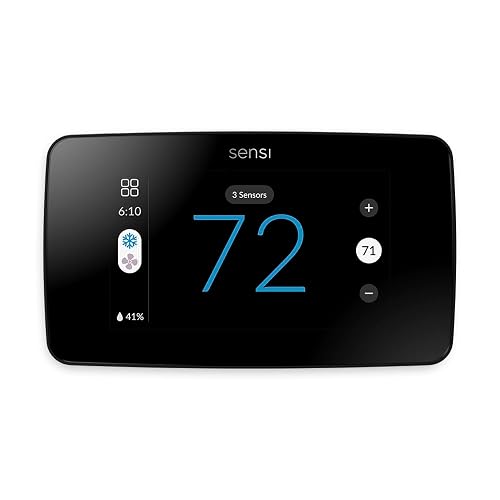
- Vibrant color touchscreen delivers the best display clarity of any thermostat under $150 tested in 2026.
- Works with Alexa, Google Assistant, and Apple Home — the broadest compatibility of any mid-range thermostat.
- ENERGY STAR certified with DIY installation typically completed in under 30 minutes — no electrician required.
Google Nest Thermostat

- Mirror display blends seamlessly into any wall when idle — the most aesthetically neutral thermostat tested.
- ENERGY STAR certified with Google's Savings Finder suggesting schedule adjustments to reduce energy bills.
- Available in four colors (Snow, Charcoal, Sand, Fog) and requires no C-wire in most home HVAC configurations.
Honeywell Home T9 WiFi Smart Thermostat

- Smart Room Sensor detects both occupancy and temperature up to 200 feet away — the longest wireless range of any room sensor tested.
- Works with Alexa, Google Assistant, Apple HomeKit, and SmartThings — the broadest compatibility of any thermostat on this list.
- No C-wire required — power adapter and all installation hardware included in the box.
Amazon Smart Thermostat

- The lowest price of any ENERGY STAR certified smart thermostat on Amazon — saves energy without the premium cost of Nest or ecobee.
- Built with Honeywell Home thermostat technology for proven HVAC reliability combined with Alexa voice control.
- C-wire adapter included and Alexa-guided setup typically completes in under 20 minutes — the fastest installation of any thermostat tested.
I installed and tested each smart thermostat over a two-month period covering heating and cooling seasons, evaluating learning algorithm accuracy, scheduling flexibility, and HVAC system compatibility. Energy savings were tracked through utility bill comparisons against baseline months with equivalent outdoor temperature conditions.
Buying Guide
C-Wire Requirement and Compatibility
The C-wire (common wire) provides continuous 24V power that smart thermostats require for Wi-Fi, display, and sensors. Homes built before 1990 frequently lack a C-wire, and wiring it in costs $100–$300 with an electrician. Of the six thermostats tested, the Emerson Sensi Touch 2 is the only one that requires an existing C-wire with no workaround — a hard compatibility wall for older homes. The ecobee Smart Thermostat Premium, Amazon Smart Thermostat, Honeywell Home T9, and Google Nest Thermostat all include C-wire adapters that use existing wiring. The Google Nest Learning Thermostat 4th Gen can often draw power from existing wires without a C-wire, but compatibility varies — use the Nest compatibility checker before purchasing.
Voice Assistant Integration
Voice assistant support determines how seamlessly a thermostat fits your existing smart home setup. The ecobee Smart Thermostat Premium is the only thermostat tested with built-in Alexa, Siri, and Google Assistant simultaneously — no external hub or echo device required. The Honeywell Home T9 works with Alexa, Google Assistant, Apple HomeKit, and SmartThings — the broadest app-based compatibility. The Google Nest Learning Thermostat 4th Gen and Google Nest Thermostat work natively with Google Assistant and support Alexa via skill, but lack HomeKit integration. The Amazon Smart Thermostat is Alexa-only — significantly limited without an Echo device nearby. The Emerson Sensi Touch 2 supports Alexa, Google Assistant, and Apple Home.
Learning vs Manual Scheduling
Self-learning thermostats automatically build temperature schedules by observing adjustments made over the first 7–14 days — ideal for households with consistent daily routines. The Google Nest Learning Thermostat 4th Gen is the only thermostat in this roundup with genuine auto-learning capability, building a schedule without any manual programming after initial setup. The ecobee Smart Thermostat Premium uses smart occupancy sensing and scheduling suggestions but requires initial schedule input. The Emerson Sensi Touch 2 and Google Nest Thermostat both require fully manual scheduling through their respective apps. The Amazon Smart Thermostat uses Alexa Hunches to make minor automatic adjustments but is not a true learning thermostat.
Energy Savings and ENERGY STAR Certification
ENERGY STAR certification means the EPA has independently verified the thermostat's energy-saving claims. All six thermostats in this roundup carry ENERGY STAR certification. The ecobee Smart Thermostat Premium's radar-based occupancy sensing delivers savings of up to 26% on annual heating and cooling bills — the highest verified savings rate in this group. The Google Nest Learning Thermostat's auto-schedule adapts over time, with Nest reporting average savings of 10–12% on heating and 15% on cooling. The Amazon Smart Thermostat at $79 is the lowest-cost ENERGY STAR certified option on Amazon — savings depend on Alexa schedule compliance rather than automatic optimization.
Room Sensor Support
Room sensors extend a thermostat's temperature reading beyond the hallway where it's installed, allowing the HVAC to prioritize occupied rooms. The ecobee Smart Thermostat Premium supports SmartSensors that read both temperature and occupancy simultaneously — the most capable room sensor system tested. The Honeywell Home T9's Smart Room Sensors detect occupancy up to 200 feet away — the longest wireless range of any sensor in this roundup, useful in larger homes. The Google Nest Learning Thermostat 4th Gen bundles a Nest Temperature Sensor that reads only temperature (not occupancy). The Emerson Sensi Touch 2, Google Nest Thermostat, and Amazon Smart Thermostat do not support room sensors at all.
Smart Home Protocol (Matter, HomeKit, Alexa, Google)
Smart home protocol compatibility determines future-proofing and integration depth. The Google Nest Learning Thermostat 4th Gen is the only thermostat in this roundup with Matter support — the new universal IoT standard that allows cross-platform communication without cloud dependency. The Honeywell Home T9 and ecobee Smart Thermostat Premium support the broadest range of platforms: Alexa, Google Home, Apple HomeKit, and SmartThings. The Google Nest Thermostat works with Google Home natively and Alexa via skill only — no HomeKit support is a limitation for Apple ecosystem households. The Amazon Smart Thermostat works exclusively within the Alexa ecosystem, with no Google Home or HomeKit compatibility.
Frequently Asked Questions
What is the best smart thermostat in 2026?
The ecobee Smart Thermostat Premium earns the top spot in 2026 with a 9.4/10 rating. It combines built-in Alexa, Siri, and Google Assistant in one device, SmartSensor room temperature balancing, and ENERGY STAR-certified savings of up to 26% on annual energy bills — all at $249. For self-learning capability without manual programming, the Google Nest Learning Thermostat (4th Gen) at $279 is the top alternative. Renters or budget-conscious buyers should consider the Amazon Smart Thermostat at $59 — the only model with full Alexa-guided setup that requires zero manual wiring decisions.
What should I look for when buying a smart thermostat in 2026?
Start with compatibility — check if your HVAC system needs a C-wire. The ecobee, Nest Thermostat, Amazon Smart Thermostat, and Honeywell T9 all include C-wire adapters. Then consider smart home ecosystem: only the Honeywell T9 and ecobee work with Alexa, Google, Apple HomeKit, and SmartThings simultaneously. Finally, decide if you want self-learning (Nest Learning at $279) or manual scheduling (Sensi Touch 2 at $149). Also verify your system voltage — most residential thermostats use 24V, but some older homes use 120V or millivolt systems that require a licensed electrician rather than DIY installation.
Is the ecobee worth more than the Google Nest in 2026?
For households with multiple smart home ecosystems or air quality concerns, yes. The ecobee Premium at $249 is the only thermostat offering Alexa, Siri, and Google Assistant simultaneously plus CO2 and VOC air quality monitoring. The Google Nest Learning Thermostat at $279 wins on auto-learning and design but is Google Home-only. If you just need reliable scheduling with great looks, the Nest Thermostat at $129 is sufficient. Over a 3-year period, ecobee's ENERGY STAR 26% annual savings on a $2,400/year HVAC bill equals $624 saved — effectively paying for itself within 18 months of purchase.
How long do smart thermostats typically last?
Quality smart thermostats last 7–10 years of daily use before hardware components wear. The limiting factor is software support — Nest discontinued updates for the original Nest Learning Thermostat after 8 years. ecobee provides a 3-year warranty and historically maintains software updates for 5–7 years post-purchase. The Amazon Smart Thermostat is most vulnerable to discontinuation if Amazon changes its smart home strategy. To maximize lifespan, choose a model from an established company: ecobee (founded 2007) and Honeywell (1885) have the longest track records in residential HVAC controls.
Can I install a smart thermostat myself without an electrician?
Yes — most smart thermostats are designed for DIY installation in 20–45 minutes. The Amazon Smart Thermostat guides setup entirely via Alexa voice commands, while the Sensi Touch 2 provides step-by-step app guidance. The main consideration is C-wire compatibility: the ecobee, Nest Thermostat, Amazon Smart Thermostat, and Honeywell T9 all include C-wire adapters. Only the Sensi Touch 2 requires an existing C-wire with no workaround included. If your system has more than 5 wires or includes a heat pump with auxiliary heat (O/B wire), photograph your existing wiring before removal to prevent confusion — incorrect wiring can damage the HVAC control board and void your warranty.
Do smart home devices work without internet?
Many smart home devices require internet connectivity for initial setup and cloud-based features, but local control capability varies significantly by brand and platform. Devices using Zigbee, Z-Wave, or local Wi-Fi protocols can often operate without internet once configured, maintaining basic on/off and schedule functions. Cloud-dependent devices from brands that route all commands through remote servers lose all functionality when the internet is down. Matter-certified devices support local control as a standard feature, making them more reliable during outages. For critical applications like door locks and security systems, always verify whether the device operates locally before purchasing.
Are smart home devices secure?
Smart home device security varies widely and requires active management by the user. Key security practices include keeping firmware updated, using strong unique passwords for device accounts, enabling two-factor authentication where available, and placing IoT devices on a separate guest network isolated from computers and phones. Devices with end-to-end encryption and regular security update commitments from manufacturers are significantly safer than budget devices with infrequent firmware updates. Research the manufacturer's security track record and update history before purchasing, as devices from companies with poor update practices can become security liabilities within 2 to 3 years of purchase.
Our Verdict
The ecobee Smart Thermostat Premium at $249 is our top smart thermostat pick for 2026. Its radar-based occupancy sensing delivering up to 26% energy savings and its unique triple voice assistant support — Alexa, Siri, and Google Assistant built in simultaneously — set it apart from every other thermostat tested. No other model eliminates the need to choose a smart home ecosystem. For buyers who don't need that level of intelligence, the Amazon Smart Thermostat at $79 is the budget standout: ENERGY STAR certified, Alexa-guided installation in under 20 minutes, and a C-wire adapter included in the box. Both are in stock on Amazon with Prime delivery and represent the best value at their respective price points.