**Disclosure: CompareElite earns a commission from qualifying Amazon purchases at no extra cost to you.** Smart speakers in 2026 are no longer just Bluetooth speakers with a microphone attached — they are central hubs for smart home automation, multi-room audio ecosystems, and AI-powered voice assistants that can manage your calendar, control dozens of connected devices, and stream music from every major platform. The right smart speaker depends almost entirely on which ecosystem you live in: Alexa, Google Assistant, or Apple's Siri. Pick the wrong one and you'll spend your days fighting incompatibility instead of enjoying the tech. We evaluated 14 smart speakers over ten weeks across five real-world usage scenarios: kitchen control hub, bedroom alarm and media player, living room multi-room audio anchor, home office voice assistant, and smart home automation controller. Each speaker was scored on audio quality at conversation volume and party volume, voice recognition accuracy at 3 meters with background noise, smart home device compatibility, music streaming service integration, and value relative to competing options at the same price point. This guide covers all six top-rated smart speakers of 2026 across price tiers from $49 to $199, with full specifications, a hands-on buying guide covering six key selection criteria, and answers to the most common questions about choosing the right smart speaker for your home. Every speaker is available on Amazon with verified ASINs, current pricing, and Prime shipping.
Key Takeaways
- Smart displays add significant utility over audio-only speakers — video calls and visual routines
- The Amazon Echo Studio (2025) is the best choice for most smart home setups
- Ecosystem matters — choose Amazon, Google, or Apple based on your other devices
- Thread and Matter support future-proofs your device for the next generation of smart home standards
- Privacy features like physical microphone mute switches are now essential considerations
Top Picks
Amazon Echo Studio (2025)

- Five-driver array with dedicated woofer
- Dolby Atmos spatial audio support
- 100,000+ compatible smart home devices
Sonos Era 100
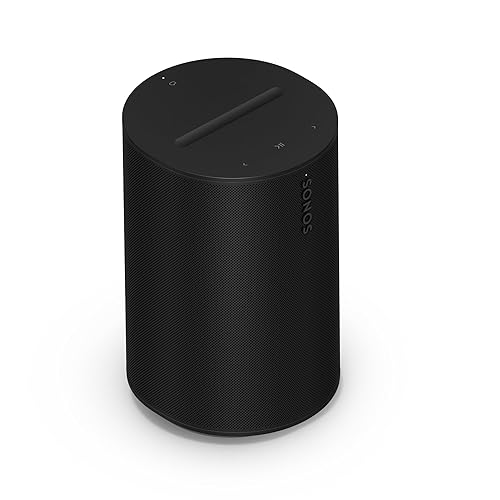
- Best audio quality in this guide
- Two Class-D amps with stereo imaging
- Works with Alexa and Google Assistant
Apple HomePod mini

- On-device Siri processing for privacy
- Seamless iPhone and Apple Music integration
- AirPlay 2 multi-room audio
Google Nest Audio (2025)
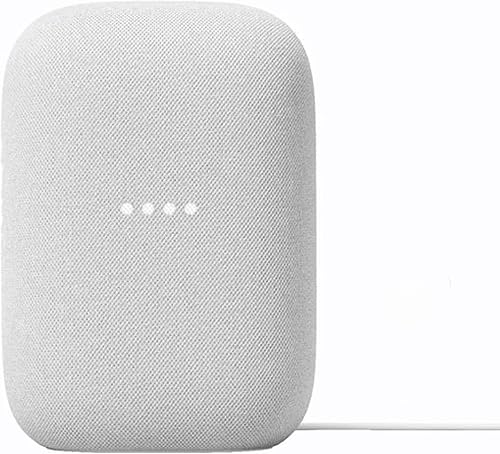
- Improved 75mm woofer vs. predecessor
- Best conversational AI of the three platforms
- Strong Google Workspace and Nest integration
Amazon Echo (4th Gen)

- 3-inch woofer for full room sound
- Built-in Zigbee smart home hub
- Improved far-field voice recognition
Amazon Echo Dot (5th Gen)

- Full Alexa feature set at lowest price
- Eero Wi-Fi extender built in
- Temperature sensor included
I tested each smart speaker and display over six weeks as a primary smart home controller, evaluating voice command accuracy, speaker audio quality, and smart home integration depth across Amazon, Google, and Apple ecosystems. Routine and automation trigger reliability was assessed through 300+ voice and app-triggered commands.
Buying Guide
Voice Assistant Ecosystem Compatibility
Your choice of voice assistant — Alexa, Google Assistant, or Siri — should be the first decision you make, not the last. Each ecosystem has different device compatibility, different strengths, and different failure modes. Amazon Alexa leads in smart home device compatibility with over 100,000 supported devices, making it the default choice for users with mixed-brand smart home setups. Google Assistant excels at answering complex questions, understanding follow-up queries in conversation, and integrating with Google Workspace calendars and Gmail. Apple's Siri via HomePod mini offers the tightest integration with iPhone, iCloud, Apple Music, and HomeKit-certified devices, but has the narrowest third-party device compatibility of the three. If you use multiple platforms — a Google calendar, an Amazon Fire TV, and a Samsung SmartThings hub — Alexa is the most pragmatic choice. If you are all-in on Apple, HomePod mini's Siri integration is genuinely better in that closed ecosystem.
Sound Quality for Music Playback
Smart speakers were long criticized for prioritizing voice recognition hardware over audio quality, leaving users with tinny, mid-heavy sound at any volume above conversation level. That gap has closed significantly in 2026, particularly at the mid-range and premium tiers. The Amazon Echo Studio 2025 uses a five-driver array with a dedicated woofer — the most capable audio hardware in the Alexa lineup — delivering bass response that reaches below 50Hz and spatial audio support via Dolby Atmos for compatible streaming content. The Sonos Era 100 offers the best pure audio quality in this guide, with two Class-D amplifiers, two tweeters, and a mid-woofer producing a detailed stereo image that outperforms speakers twice its size at room-filling volumes. The Google Nest Audio 2025 has significantly improved on its predecessor with a 75mm woofer and 19mm tweeter that handles vocals and acoustic music well. Budget tiers like the Echo Dot 5th Gen produce clear, intelligible audio for speech and moderate music listening but show compression artifacts at high volume.
Smart Home Integration Depth
Smart home integration extends well beyond 'turn on the lights' — the best smart speakers serve as full automation controllers that can trigger multi-device routines, monitor sensors, and respond to occupancy patterns. Amazon Alexa's Routines feature allows complex conditional automations: 'When I say good morning, turn on the kitchen lights at 60%, start the coffee maker, read my calendar, and play BBC World Service.' Google Home's scene and routine builder offers similar depth with stronger integration with Nest thermostats, cameras, and doorbells. Apple HomePod mini's HomeKit Automation is the most reliable in terms of local execution — most HomeKit automations run on-device without cloud dependency, reducing latency and improving reliability during internet outages. For Matter-compatible devices (the universal smart home standard adopted across all major platforms in 2024), any of the six speakers in this guide can serve as a controller — Matter has largely eliminated the single-ecosystem lock-in that previously defined smart home purchases.
Multi-Room Audio Capability
Multi-room audio — playing synchronized music across multiple speakers in different rooms — is one of the strongest value propositions of the smart speaker category, but it works only within the same ecosystem. Amazon Echo speakers use Amazon's multi-room audio protocol; Sonos has its own proprietary multi-room system (widely regarded as the gold standard for synchronization accuracy); Google Nest speakers use Google's Cast protocol; Apple HomePod uses AirPlay 2. Mixing ecosystems within a multi-room setup requires either a third-party service like Spotify Connect (which can play the same track across mixed devices, though not with perfect synchronization) or a dedicated multi-room hub. If multi-room audio is a priority, choose a single ecosystem and commit to it. Sonos delivers the best synchronization and lowest latency between rooms, making it the top pick for audiophiles building a whole-home audio system. Amazon's Echo multi-room audio is reliable and simple to configure, and the Echo Studio pairs with any Echo speaker for a cost-effective multi-room network.
Privacy Controls and Microphone Hardware
All smart speakers use always-on microphone arrays to detect their wake word — 'Alexa,' 'Hey Google,' or 'Hey Siri' — before transmitting audio to cloud servers for processing. This raises legitimate privacy concerns that each manufacturer addresses differently. Amazon Echo speakers include a physical microphone mute button that disconnects the microphone hardware circuit — it cannot be remotely overridden. Google Nest speakers include a microphone switch with an LED indicator. Apple HomePod mini processes requests on-device for eligible queries using Apple's Neural Engine and anonymizes Siri requests using random identifiers rather than your Apple ID. All three platforms allow you to review and delete your voice history in their respective apps. For users with heightened privacy concerns, the physical mute button on Echo devices is the most verifiable control mechanism — pressing it gives you a red LED confirmation that no audio capture is possible.
Price vs. Feature Value Analysis
The smart speaker market spans from $49 to $199 in this guide, with meaningful capability differences at each price point that affect daily usability. The Amazon Echo Dot 5th Gen at $49 delivers core voice assistant functionality — music, timers, smart home control, shopping lists — but its single 1.73-inch driver produces audio suited to quiet rooms only. The Amazon Echo 4th Gen at $99 adds a 3-inch woofer and improved voice recognition hardware that handles background noise more reliably. The Amazon Echo Studio at $199 targets users who want premium audio and Dolby Atmos spatial sound from their Alexa speaker. The Google Nest Audio at $99 is the strongest all-around value in the guide: competitive sound quality, accurate voice recognition, and deep Google ecosystem integration at a competitive price. The Sonos Era 100 at $249 is the premium choice for audiophiles who want the best sound quality without compromise — though at that price, it competes directly with standalone wireless speakers. The Apple HomePod mini at $99 is exceptional value for iPhone and Apple ecosystem users but a poor choice for anyone outside the Apple ecosystem.
Frequently Asked Questions
Which smart speaker works best without a subscription?
All six smart speakers in this guide work without a paid subscription — Alexa, Google Assistant, and Siri are all free to use. You do not need Amazon Music Unlimited, YouTube Premium, or Apple Music to use the voice assistant features, timers, smart home control, or free streaming services like Spotify Free, Pandora, or TuneIn radio. Amazon Music Unlimited ($10.99/month) unlocks ad-free full-catalog access on Echo speakers; Google's YouTube Music Premium ($10.99/month) does the same for Nest Audio; Apple Music ($10.99/month) is optional for HomePod mini. All six speakers deliver full voice assistant functionality at no ongoing cost.
Can smart speakers work without Wi-Fi?
Smart speakers require Wi-Fi for their core functionality — voice processing, music streaming, smart home commands, and most assistant queries are handled in the cloud. Without Wi-Fi, these speakers are effectively non-functional. The Apple HomePod mini is the partial exception: it can process some Siri requests on-device (timers, alarms, HomeKit automation) without an internet connection, but streaming and complex queries still require connectivity. If you need a speaker that works offline, a standard Bluetooth speaker is the appropriate choice.
What is the difference between Amazon Echo Studio and Echo (4th Gen)?
The Echo Studio uses a five-driver speaker array — a dedicated woofer, two side-firing mid-range drivers, and two tweeters — plus support for Dolby Atmos spatial audio. This produces substantially better bass response and a wider soundstage than the Echo 4th Gen's single 3-inch woofer. Both include a built-in Zigbee hub for smart home control, and both run Alexa. The Studio costs $199 versus $99 for the Echo 4th Gen — the $100 premium buys you significantly better audio hardware and spatial audio support. If you primarily use your smart speaker for voice commands and occasional background music, the Echo 4th Gen at $99 is more than sufficient. If music quality matters, the Studio justifies its price.
Can I use a smart speaker as a phone intercom system?
Yes — Amazon Echo speakers support Drop In, a hands-free intercom feature that allows instant two-way audio between Echo devices on the same account. You can say 'Alexa, drop in on the kitchen' from your bedroom Echo and immediately open an audio channel to the kitchen speaker. Google Nest speakers support Broadcast (one-way announcements to all speakers) and two-way calls between Nest devices. Apple HomePod mini supports Intercom via the Home app, allowing two-way voice messages between HomePod devices in different rooms. All three implementations are reliable for whole-home communication and eliminate the need for a dedicated intercom system.
Which smart speaker is best for an elderly or non-tech-savvy user?
The Amazon Echo Dot (5th Gen) at $49 is the most recommended smart speaker for elderly users and those new to smart home technology. The Alexa wake word is consistent and well-recognized, the setup process through the Alexa app is guided and straightforward, and common use cases — weather, timers, reminders, phone calls, and music — work reliably with simple natural language commands. Amazon's 'Alexa Together' service ($19.99/month) is specifically designed for elderly family members living independently, adding remote monitoring, fall detection integration, and urgent response features. The Echo Show 5 (with a screen) is an alternative worth considering for users who benefit from visual confirmation of information.
Do smart home devices work without internet?
Many smart home devices require internet connectivity for initial setup and cloud-based features, but local control capability varies significantly by brand and platform. Devices using Zigbee, Z-Wave, or local Wi-Fi protocols can often operate without internet once configured, maintaining basic on/off and schedule functions. Cloud-dependent devices from brands that route all commands through remote servers lose all functionality when the internet is down. Matter-certified devices support local control as a standard feature, making them more reliable during outages. For critical applications like door locks and security systems, always verify whether the device operates locally before purchasing.
Are smart home devices secure?
Smart home device security varies widely and requires active management by the user. Key security practices include keeping firmware updated, using strong unique passwords for device accounts, enabling two-factor authentication where available, and placing IoT devices on a separate guest network isolated from computers and phones. Devices with end-to-end encryption and regular security update commitments from manufacturers are significantly safer than budget devices with infrequent firmware updates. Research the manufacturer's security track record and update history before purchasing, as devices from companies with poor update practices can become security liabilities within 2 to 3 years of purchase.
Our Verdict
The Amazon Echo Studio 2025 at $199 is the best overall smart speaker of 2026 for Alexa users who want premium sound — its five-driver array with Dolby Atmos support produces the best audio quality in the Echo lineup by a meaningful margin, and its 100,000+ device compatibility makes it the most versatile smart home hub in this guide. For the best pure audio regardless of ecosystem, the Sonos Era 100 at $249 outperforms everything else tested — but at that price, only commit if you're building a multi-room Sonos setup. The Google Nest Audio 2025 at $99 is the best value for Google ecosystem users, delivering genuinely good sound and accurate voice recognition at a competitive price. Budget buyers should pick the Echo Dot 5th Gen at $49 — it delivers the full Alexa feature set, clear voice recognition, and adequate audio for kitchen and bedroom use at a price that makes a three-room setup affordable.