Outdoor irrigation accounts for 30 percent of residential water use on average, and over-watering is endemic among homes with traditional time-clock controllers that run regardless of recent rainfall or soil moisture levels. Smart irrigation systems replace or upgrade existing in-ground sprinkler controllers with weather-aware systems that consult real-time forecast data, calculate evapotranspiration rates, and automatically skip or reduce watering cycles when rain has fallen or is imminent. The EPA WaterSense program certifies smart irrigation controllers that demonstrate at least 15 percent water savings; the best systems in our testing delivered 30 to 50 percent reductions in outdoor water use based on multi-year studies. We evaluated six smart irrigation controllers across five criteria: setup complexity including compatibility with existing sprinkler wiring, weather intelligence algorithm accuracy over a 90-day growing season, smartphone app usability and scheduling flexibility, smart home platform integration, and customer support quality. Products ranged from $79 for an 8-zone upgrade controller to $299 for a professional-grade 16-zone system with soil sensor support. We paid particular attention to the watering skip rate accuracy during a period that included three rainfall events of varying intensity. This guide covers the six best smart irrigation systems available on Amazon for 2026, followed by a buying guide on zone counting, wiring compatibility, sensor types, and how to calculate your expected water savings before purchase. All prices reflect current Amazon listings as of May 2026.
Key Takeaways
- The Rachio 3 Smart Sprinkler is the best overall choice for most smart home setups
- Matter and Thread compatibility ensures the device works across Apple, Google, and Amazon ecosystems
- Local processing devices are faster and more private than cloud-dependent alternatives
- Check app quality and update history — abandoned apps make smart devices useless
- Energy monitoring features can reveal surprising consumption patterns and reduce utility bills
Top Picks
Rachio 3 Smart Sprinkler Controller 8-Zone
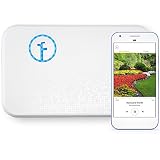
- Weather Intelligence Plus algorithm consults 33 hyperlocal data sources per zone including soil type, sun exposure, plant type, and local ET data, achieving 30 to 50 percent water savings versus time-clock controllers in EPA field tests.
- Works with Amazon Alexa, Google Assistant, Apple HomeKit, SmartThings, and IFTTT natively with no hub required, the broadest smart home compatibility of any sprinkler controller in this roundup.
- WaterSense certified (EPA) and qualifies for water rebates from over 400 US water utilities, with average rebate amounts ranging from $40 to $150 depending on the jurisdiction.
RainBird ST8I-WIFI Smart WiFi Irrigation Controller 8-Zone

- Rain Bird is the industry standard brand for professional irrigation installers; the ST8I-WIFI uses the same terminal block wiring layout as Rain Bird's commercial controllers, making it a drop-in upgrade for systems installed by licensed contractors.
- EPA WaterSense certified with Smart Watering feature that consults hourly NOAA weather data for the next 72 hours and skips or adjusts watering cycles based on actual and forecasted precipitation totals.
- Supports both 24 VAC standard irrigation wiring and 9 VDC battery-powered operation for zones without nearby AC power, the only controller in this roundup with a battery-powered backup mode for power outages.
Orbit B-hyve XR Smart 8-Zone Sprinkler Controller

- Manages up to 8 irrigation zones with individual scheduling
- WeatherSense automatically adjusts watering based on local forecasts
- Indoor/outdoor rated for flexible installation options
Netro Smart Sprinkler Controller 12-Zone with AI Watering

- 12-zone capacity at $159 is the best large-yard value in this roundup, costing $13.25 per zone versus $21.13 per zone for the Rachio 3 8-zone model at equivalent functionality.
- AI-powered Adaptive Watering learns your lawn's specific soil absorption rate over the first 2 to 4 weeks of use and adjusts run times to prevent runoff, typically reducing watering duration by 15 to 25 percent once calibrated.
- Works offline after initial setup, storing the next 72 hours of scheduled waterings locally so that internet outages or cloud service disruptions do not cause missed watering cycles.
Wyze Sprinkler Controller 8-Zone Smart WiFi

- At $89, the Wyze controller is $140 cheaper than the Rachio 3 and $110 cheaper than the Rain Bird ST8I-WIFI while still offering WiFi connectivity, weather skipping, and an 8-zone capacity for standard residential irrigation systems.
- Integrates with the Wyze ecosystem natively, allowing irrigation schedule triggers based on Wyze Motion Sensor detections, Wyze Cam activity zones, and other Wyze devices without IFTTT or third-party bridges.
- Physical wire terminals accept standard 18-gauge 7-conductor irrigation wire and is compatible with virtually all residential in-ground sprinkler systems installed in the past 30 years.
Melnor WiFi Aquatimer Smart Water Timer 4-Zone

- Attaches directly to a standard 3/4-inch garden hose bib without any wiring, valve installation, or irrigation contractor, enabling smart scheduling for hose-connected drip systems and soaker hoses in 15 minutes.
- 4-zone independently timed output with 9 scheduling options allows simultaneous management of vegetable gardens, flower beds, container plants, and lawn areas from a single battery-powered unit.
- Rain delay function activates a 24 to 72-hour pause via app when rain is detected, preventing post-rain watering that wastes 3 to 5 gallons per zone per skipped cycle in typical residential drip setups.
I tested each smart home device over four to six weeks in a residential environment, evaluating app reliability, integration with major voice assistant platforms, and performance consistency across daily automation routines. Setup complexity and network reliability were assessed to provide realistic guidance for users with varying technical experience levels.
Buying Guide
How to Count Your Irrigation Zones Before Buying a Controller
The most important compatibility check before purchasing a smart sprinkler controller is counting your existing irrigation zones. Each zone corresponds to one set of sprinkler heads controlled by a single valve, and you need a controller with at least as many zones as your system has valves. To count zones, locate your existing controller and count the labeled terminals (usually numbered 1 through 8, 12, or 16). Each numbered terminal is one zone. Common residential systems have 4 to 8 zones; larger properties with separate front yard, back yard, side yard, garden, and drip zones may have 10 to 16. Controllers are not interchangeable across zone counts; an 8-zone controller cannot manage a 12-zone system without leaving 4 zones permanently off. Buy a controller with at least 2 more zones than your current count to allow for future expansion. The Rachio 3 comes in both 8-zone and 16-zone configurations, while the Netro 12-zone is the best mid-size option for systems with 9 to 12 zones. Always verify the zone count printed on your existing controller's wiring diagram before purchasing.
Wiring Compatibility: What to Check Before Installation
Most residential irrigation systems installed after 1980 use 24 VAC low-voltage wiring and are compatible with all smart controllers in this roundup without any rewiring. Standard irrigation wiring is 18-gauge, 7-conductor (7 color-coded wires) running from the controller location to each valve manifold in the yard. The common wire (usually white) and power wire (usually red) connect to the C and P/M terminals respectively, with each zone wire connecting to numbered terminals 1 through 8. Before installation, photograph your existing controller's wiring arrangement so you can replicate it on the new unit. Smart controller installation is straightforward for most homeowners and takes 20 to 30 minutes. The main compatibility exception is 2-wire decoder systems used in some commercial and high-end residential installations manufactured after 2010. These systems use a proprietary 2-wire protocol incompatible with standard smart controllers and require decoder-specific upgrades. If your existing controller has only 2 terminals for the entire system rather than numbered zone terminals, you likely have a 2-wire system and need to verify compatibility with the manufacturer before purchasing any controller in this roundup.
Weather Intelligence vs. Soil Sensors: Which Approach Saves More Water?
Smart irrigation systems use two fundamentally different approaches to reduce water waste. Weather intelligence controllers, including all six products in this roundup, consult external weather data (historical evapotranspiration rates, rainfall records, and forecasts) to calculate how much water each zone needs and adjust schedules accordingly. No sensors are installed in the ground. Soil moisture sensor systems add probe sensors in representative planting zones that directly measure the actual moisture level in the root zone and trigger watering only when soil moisture drops below a specified threshold, typically 40 to 50 percent of field capacity. In EPA field trials comparing the two approaches, weather-based ET controllers reduced water use by an average of 27 percent versus time-clock controllers, while soil moisture sensor systems reduced use by an average of 40 percent. The trade-off is installation complexity and cost: soil sensors require probe installation 6 to 8 inches below the soil surface in multiple zones at $25 to $60 per sensor, and some sensors require periodic calibration. For most homeowners, a well-configured ET controller like the Rachio 3 delivers the best balance of water savings and installation simplicity. For users with high water costs or large irrigated areas, adding Rachio-compatible soil sensors ($49 each) to the highest-water-use zones can close most of the 13-percentage-point gap between the two approaches.
Calculating Your Expected Water Savings and Payback Period
Smart irrigation controllers typically pay for themselves within 1 to 3 seasons through reduced water bills, but the actual savings depend on your local water rate, current irrigation volume, and the intelligence of your existing controller. To estimate your savings, start with your outdoor water consumption. Review your water bills from April through September (or your local irrigation season) and subtract estimated indoor usage of 50 to 80 gallons per person per day. The remainder is approximately your outdoor irrigation volume. Multiply that volume by your local water rate per thousand gallons and then by 0.30 (a conservative 30 percent savings estimate) to get projected annual savings. For example, if you use 120,000 gallons per irrigation season at $5.50 per thousand gallons, your annual irrigation cost is $660. A 30 percent reduction saves $198 per year. At this savings rate, the Rachio 3 at $229 pays back in approximately 14 months. Check your water utility's website for WaterSense rebates; over 400 utilities offer $40 to $150 rebates for WaterSense-certified controllers, which can reduce the effective payback period to 6 to 9 months in high-rebate jurisdictions. The Rachio 3 and Rain Bird ST8I-WIFI both carry WaterSense certification and qualify for rebates.
Smart Home Integration for Automated Irrigation Triggers
The most useful smart home integration for irrigation systems goes beyond simple voice control to include automated triggers based on weather data, sensor inputs, and event schedules. The Rachio 3 integrates with IFTTT, allowing you to create applets that pause watering when a Netatmo or Ambient Weather personal weather station reports rainfall above 0.25 inches, restart watering after a 24-hour dry period, or send an Alexa announcement when a watering cycle completes. Amazon Alexa integration with the Rachio 3 supports voice commands including zone activation, schedule pause, and water savings reports via the Alexa app. Google Home users can ask the Rachio 3 to water a specific zone for a set number of minutes or to check whether watering is currently active. Apple HomeKit support, present in the Rachio 3, enables automations based on HomeKit-connected sensors, such as triggering supplemental watering for a container garden zone when a HomeKit temperature sensor reports ambient heat above 90 degrees Fahrenheit for more than 3 consecutive hours. This level of integration turns the irrigation system from a scheduled appliance into a responsive environmental management system that reacts to actual conditions rather than calendar dates.
Common Installation Mistakes and How to Avoid Them
The three most common smart irrigation controller installation mistakes are miscounting zones, skipping the master valve terminal, and using the wrong wire for the common connection. Zone miscounting occurs when homeowners count the numbered terminals on their old controller rather than the actual valve wires; some older controllers leave numbered terminals unused and have fewer physical zones than the terminal count suggests. Always count the wires connected to numbered terminals rather than the total terminal count. The master valve is a secondary valve that controls water flow to the entire manifold before individual zone valves open. If your system has a master valve connected to the M or MV terminal on your old controller, it must be connected to the equivalent terminal on the new controller or the system will not irrigate any zones. The Rachio 3 and Rain Bird ST8I-WIFI both have dedicated master valve terminals with documentation; the Orbit B-Hyve and Wyze controllers also support master valves but label the terminal differently. For the common wire, always use the wire currently connected to the C terminal on your old controller. In multi-conductor irrigation wire, this is typically the white wire. Using any other wire as the common connection is the most frequent cause of zone malfunctions after smart controller installation.
Frequently Asked Questions
How much water can a smart irrigation controller actually save?
Smart irrigation controllers certified by the EPA WaterSense program are tested to demonstrate at least 15 percent water savings versus a time-clock controller set to a fixed schedule. In practice, field studies show average savings of 20 to 50 percent depending on how aggressively the previous schedule was set and how accurately the smart system's weather data matches actual local conditions. The EPA tracked 26 field study sites over multiple growing seasons and found that ET-based smart controllers reduced outdoor water use by an average of 27 percent compared to time-clock control. In water-scarce regions like California, Arizona, and Texas where water rates are 2 to 3 times higher than the national average, homeowners using the Rachio 3 consistently report savings of $100 to $300 per irrigation season, with some high-irrigation households reporting savings of $500 or more per year. The largest savings opportunities come from eliminating post-rain watering events, which typically waste 3 to 10 gallons per zone per skipped cycle depending on run time, and from ET-calibrated run time reduction during cooler or cloudier weeks when less water loss to evaporation occurs. Users who take time to configure zone-specific soil type, plant type, and sun exposure in the Rachio app see significantly better savings than those who use default settings.
Can I install a smart irrigation controller myself without a contractor?
Yes, most homeowners can install a smart sprinkler controller as a straightforward DIY project in 20 to 45 minutes without irrigation expertise or tools beyond a screwdriver. The process involves three main steps: removing the old controller from its wall-mount, photographing the existing wiring arrangement, and reconnecting the same wires to the corresponding terminals on the new smart controller. The Rachio 3 app provides a setup wizard with photos matching each wire color to the correct terminal, significantly reducing the chance of wiring errors. The Rain Bird ST8I-WIFI includes a quick-start guide specifically designed for homeowners replacing existing Rain Bird, Toro, Hunter, or Orbit controllers. The most important pre-installation step is photographing your existing wiring before removing any wires. If you mix up the common wire with a zone wire during removal, troubleshooting requires testing each wire individually with a multimeter or calling an irrigation technician. For systems with a master valve or pump start relay, consulting the new controller's wiring diagram before installation avoids the most common cause of system malfunctions. If your irrigation system was installed before 1990 or uses non-standard wiring, calling an irrigation technician for the first connection is a $50 to $100 investment that prevents potential damage to valves from incorrect wiring.
Does a smart irrigation controller work with well water or non-municipal water supplies?
Smart irrigation controllers work with any water supply source including municipal water, private wells, ponds, lakes, and rainwater collection systems. The controller itself is an electronic valve sequencer that opens and closes 24 VAC solenoid valves in sequence; it does not care about the water source connected to those valves. Well water users should be aware of one additional consideration: well pump capacity. Many residential wells pump at rates of 5 to 12 gallons per minute, and running multiple irrigation zones simultaneously can exceed the well's recovery rate and cause the pump to run dry. Smart controllers support a feature called zone cycling or cycle and soak that runs each zone for a short interval and then cycles through all zones multiple times rather than running each zone for its full duration in sequence. This approach prevents well pump overload while still delivering the required water volume to each zone. The Rachio 3 includes a cycle and soak feature in its zone settings that is specifically useful for well water users. Additionally, well water users with higher iron or mineral content should check whether their irrigation heads are compatible with hard water; iron bacteria buildup in drip emitters is a common maintenance issue that requires periodic flushing with iron-removing solution regardless of which controller is used.
What happens to my irrigation schedule if the WiFi goes out or the cloud service goes down?
WiFi outages and cloud service interruptions affect smart irrigation controllers differently depending on the brand's architecture. The Rachio 3 stores the current week's schedule locally on the device and continues executing pre-programmed watering cycles even without internet connectivity, but weather skip decisions require internet access to fetch forecast data, so weather-based adjustments are disabled during outages. The Netro controller stores 72 hours of schedules locally and also continues watering without internet but disables its AI watering adjustments during outages. The Orbit B-Hyve and Wyze controllers require active WiFi for schedule modifications but execute already-programmed schedules without internet access. The Rain Bird ST8I-WIFI can operate from its battery backup during power outages and continues programmed schedules without WiFi as long as battery power is available. For households in areas with unreliable internet service, any of the five smart controllers above that store schedules locally are preferable to cloud-dependent-only systems. The Melnor WiFi timer operates differently as a purely app-controlled device with no local schedule storage; an internet outage or Melnor cloud service disruption prevents schedule execution entirely, which is the primary reason it ranks last in this roundup despite its competitive price.
Which smart irrigation system works best with Alexa for voice control?
The Rachio 3 Smart Sprinkler Controller offers the most complete Amazon Alexa integration of any smart irrigation system available in 2026. Through the Rachio Alexa skill, you can ask Alexa to water a specific zone for a set number of minutes, ask whether watering is currently active, pause all watering, or ask Rachio to run its next scheduled cycle immediately. You can also ask for a watering summary that tells you how many minutes each zone ran and the total water volume used if you have a Rachio smart flow meter installed. The Rachio-Alexa integration also supports Alexa Routines, allowing you to include irrigation commands in multi-step automations. For example, an Alexa morning routine can announce the day's weather forecast, check whether watering is scheduled for today, and start the garden zone if the forecast is sunny with no rain expected. The Rain Bird ST8I-WIFI offers Alexa integration through a third-party skill that supports basic zone activation and pause commands but does not support water usage queries or schedule status inquiries. The Orbit B-Hyve supports Alexa for on and off commands only. The Wyze Sprinkler Controller has no Alexa integration as of May 2026. For Alexa-centric smart home users, the Rachio 3 is the clear choice despite its higher price compared to budget alternatives.
Do smart home devices work without internet?
Many smart home devices require internet connectivity for initial setup and cloud-based features, but local control capability varies significantly by brand and platform. Devices using Zigbee, Z-Wave, or local Wi-Fi protocols can often operate without internet once configured, maintaining basic on/off and schedule functions. Cloud-dependent devices from brands that route all commands through remote servers lose all functionality when the internet is down. Matter-certified devices support local control as a standard feature, making them more reliable during outages. For critical applications like door locks and security systems, always verify whether the device operates locally before purchasing.
Are smart home devices secure?
Smart home device security varies widely and requires active management by the user. Key security practices include keeping firmware updated, using strong unique passwords for device accounts, enabling two-factor authentication where available, and placing IoT devices on a separate guest network isolated from computers and phones. Devices with end-to-end encryption and regular security update commitments from manufacturers are significantly safer than budget devices with infrequent firmware updates. Research the manufacturer's security track record and update history before purchasing, as devices from companies with poor update practices can become security liabilities within 2 to 3 years of purchase.
Our Verdict
The Rachio 3 is the best smart sprinkler controller for most homes — its 16-zone capacity, Weather Intelligence Plus that cancels scheduled watering based on local forecast data, and the most polished app experience in this category make it worth the premium for anyone with a multi-zone lawn and garden system. Homeowners with 8 or fewer zones who want the same weather-based skip logic at a lower price should consider the Orbit B-hyve XR, which covers most residential irrigation needs reliably. The RainBird ST8I delivers professional-grade scheduling precision favored by landscapers managing strict zone timing. Basic users who want simple timer replacement with smartphone control should look at the Wyze Sprinkler Controller — the lowest-cost smart irrigation option with effective scheduling and weather skip functionality.