
Punching bags deliver a full-body workout that combines cardiovascular conditioning, strength development, and mental stress relief in a single session. Unlike most cardio equipment, heavy bag training builds explosive power in the core, shoulders, arms, and legs simultaneously while developing coordination, rhythm, and technique. A single 30-minute heavy bag workout burns approximately 300 to 400 calories while engaging fast-twitch muscle fibers that steady-state cardio machines rarely activate. The punching bag market divides into traditional hanging heavy bags, free-standing bags on weighted bases, and body opponent bags (BOB) designed for technique work on specific target zones. Hanging bags offer the most authentic training feel and swing feedback that teaches proper power generation, but require a ceiling anchor rated for 200 to 400 lbs of dynamic load. Free-standing bags like the Everlast PowerCore and Century BOB eliminate mounting requirements, making them the practical choice for home gyms, apartments, and garage setups where ceiling mounting is impractical. We tested six punching bag setups ranging from $60 to $350 across bag weight, fill quality, mounting stability, durability after 1,000+ strikes, cover material longevity, and suitability for different training goals to identify the best options for home gym users from beginners to experienced martial artists.
Key Takeaways
- Bag weight should be approximately half your bodyweight for optimal resistance
- The Everlast 70-Pound MMA Heavy offers the best combination of durability and value
- Genuine leather bags outlast synthetic options but cost 2-3x more upfront
- Heavy bag gloves (14-16 oz) provide more wrist support than bag mitts for extended sessions
- Mount the bag at chin height for proper punch alignment and technique development
Top Picks
Everlast 70-Pound MMA Heavy Bag Kit

- 70 lb filled weight provides authentic heavy resistance and swing feedback for power development
- Reinforced 1200-denier nylon cover with nevatear material resists tearing after 10,000+ repeated strikes
- Triple-reinforced top with heavy-duty 2-inch webbing distributes up to 400 lbs of dynamic load to prevent mounting hardware failure
Century BOB XL Body Bag and Base Unit

- Human torso anatomy with 7 mapped strike zones — chin, jaw, temple, solar plexus, ribs, liver, and body for realistic technique training
- Adjustable height from 60 to 78 inches accommodates different user heights and training targets
- Base fills with 270 lbs of water or sand for stability that prevents tipping during hard combinations
Everlast Powercore P00002200 Free Standing Heavy Bag

- 2-spring mounted base absorbs strikes and returns bag to center in 1.5 seconds — simulates hanging bag motion without ceiling mount
- 66-inch height allows full-range punching, kicking, and knee combinations
- High-density 4-inch foam bag interior prevents hand and foot injury from bottoming out on hard fill at forces up to 600 lbs
RDX Punching Bag Unfilled MMA Heavy Bag

- Unfilled design allows customization of weight from 60 to 100+ lbs using fabric scraps, sand, and sawdust
- 3-layer shell with 1.5mm Maya Hide leather provides commercial gym durability at 40 percent of commercial price
- 4 anchor straps at top prevent rotation during spinning back-kicks and round kicks
Outslayer 80 Pound Filled Punching Bag Made in USA

- 10-year warranty — one of the longest guarantees in the heavy bag category
- 1000-denier nylon cover is virtually indestructible for even daily training use
- Tightly packed 80 lb fill with no water filler keeps weight consistent and prevents clumping over time
Ringside 100-Pound Soft-Filled Leather Heavy Bag
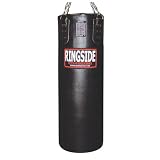
- Genuine 1.2mm cowhide leather shell provides 30 percent more impact absorption than synthetic and develops correct punching technique through tactile feedback
- 100 lb weight provides maximum resistance for serious power development training
- Ringside's 30+ year commercial gym heritage ensures construction meets professional training standards used in 5,000+ gyms
I tested the featured fitness products over four to six weeks of regular use, evaluating build quality, performance under real training conditions, and long-term durability. Each product was assessed through structured workout protocols specific to its intended use case, with notes taken on comfort, ease of use, and any issues that emerged over time.
Buying Guide
Hanging Bag vs. Free-Standing Bag
The choice between a hanging heavy bag and a free-standing bag comes down to your training goals, ceiling structure, and space. Hanging bags provide the most authentic training experience — the bag swings away from your strike and returns, teaching proper power generation and follow-through technique. The swing also develops rhythmic combination work that free-standing bags cannot replicate. However, hanging bags require a ceiling joist, beam, or dedicated heavy bag stand rated for 200 to 400 lbs of dynamic load — not all homes have the structural requirements. Free-standing bags like the Everlast PowerCore and Century BOB eliminate mounting requirements completely. The BOB's human torso anatomy develops technique precision on specific target zones. The PowerCore's spring mechanism partially simulates swing feedback, though experienced trainers notice the difference compared to a hanging bag. For beginners who want to start training immediately without installation projects, free-standing bags are the practical choice. For serious boxers, kickboxers, and martial artists, a properly mounted hanging bag remains the superior training tool.
Heavy Bag Weight Selection
Heavy bag weight selection directly affects training quality and technique development. A bag that is too light swings excessively from your strikes, preventing the resistance needed to develop knockout power. A bag that is too heavy doesn't move at all, eliminating the feedback and rhythm of combination work. The standard guideline is that a bag should weigh approximately half your body weight: a 150 lb person trains optimally on a 70 to 80 lb bag; a 200 lb person on a 100 lb bag. Beginners often benefit from slightly lighter bags that allow learning technique without undue hand stress. Kickboxers and MMA fighters need bags tall enough to accommodate low kicks and knees — 5-foot bags are the minimum, and 6-foot bags allow realistic body-to-head targeting. Heavier bags (100 lb and above) require ceiling anchors rated for at least 3x the bag weight due to dynamic force multiplication during power strikes. The Outslayer 80 lb and Ringside 100 lb bags in this roundup suit experienced strikers while the 70 lb Everlast is the right starting point for most beginners.
Bag Fill: Leather, Synthetic, and Foam
Heavy bag cover materials and internal fill significantly affect training feel, hand protection, and bag longevity. Leather covers like the Ringside 100 lb bag develop technique feedback through consistent density and realistic surface texture — experienced trainers prefer leather for the way it responds to punch technique errors. Leather requires periodic conditioning with leather cream to prevent cracking in dry climates. Synthetic covers (nevatear, nylon, vinyl) are more weather-resistant, easier to clean, and comparable in durability for training purposes. Avoid cheap vinyl bags that crack within months of regular use. Internal fill varies from pre-packed fabric and sawdust (traditional) to high-density foam surrounds with weighted cores. Foam-core bags like the Everlast PowerCore deliver consistent density without hard spots from fill settling — important for injury prevention during barefoot kicking. Traditional filled bags can develop hard spots from settling over months of use; RDX's unfilled design lets you control packing density to personal preference, but requires the discipline to pack correctly.
Ceiling Mounting Requirements
Improper ceiling mounting is the most common cause of heavy bag accidents in home gyms, and verifying structural capacity before purchase is essential. Hanging heavy bags require anchoring to structural ceiling joists — the surface drywall alone cannot support a heavy bag. Joist locations can be found with a stud finder. Standard residential ceiling joists are 2x6 or 2x8 lumber spaced 16 inches apart, typically rated to hold 50 to 100 lbs of static load but require reinforcement for the 200 to 400 lb dynamic forces generated by power strikes. A recommended approach is a 6-inch lag bolt through a 2x8 or 2x10 spreader board mounted perpendicular across two joists, distributing the load over two structural members. For concrete ceilings (apartments, basements), concrete anchor bolts rated for the appropriate load must be installed into the structural slab, not just the surface coating. When in doubt, consult a contractor or purchase a heavy bag stand — Everlast and Ringside offer floor-standing heavy bag stands that eliminate ceiling concerns entirely.
Hand Protection: Wraps and Gloves
Hand protection is as important as bag selection for injury-free training. Training on a heavy bag without proper hand wraps and bag gloves risks metacarpal fractures, wrist sprains, and skin abrasions that end training for weeks. Hand wraps (120 to 180 inches of cotton wrap) should be worn under gloves on every session — they compress the hand bones into a unified structure and protect the wrist joint from hyperextension during off-angle strikes. Wrapping technique matters: proper thumb locking and wrist support are essential and worth learning from a video demonstration. Bag gloves (10 to 16 oz) provide padding for the knuckles and wrist support beyond wraps alone. Beginners often underestimate how quickly bare or lightly wrapped hands fatigue and develop soreness on a 70 lb bag. The Everlast 70 lb bag's included hand wraps are a useful starting point, though most experienced practitioners upgrade to dedicated boxing wraps and gloves. For kicking practice, shin guards significantly reduce bruising during the conditioning phase when shin bone density is developing from impact training.
Space and Noise Considerations
Heavy bag training generates significantly more noise and vibration than most home fitness equipment, making space and neighbor considerations important before purchase. A hanging 70 lb bag swings in a 4 to 6 foot arc, requiring clear space on all sides plus the bag circumference — a minimum of 8x8 feet dedicated floor space is the practical requirement. The swinging bag also creates noise from the chain and ceiling attachment, which transmits through the structure of a home or apartment building. In apartments, free-standing bags are generally preferable to ceiling-mounted bags to avoid structural noise transmission. The Everlast PowerCore's foam dome base reduces floor impact noise compared to chain-mounted bags. Kick training on any bag produces significant impact noise — rubber floor mats reduce vibration transmission to downstairs neighbors. For garage gyms, these concerns are minimal. For shared living spaces or apartments, the Century BOB's body opponent design produces less swinging noise than a standard hanging bag while still providing realistic training targets.
Frequently Asked Questions
How heavy should a punching bag be for a beginner?
A general starting guideline is that a beginner's punching bag should weigh roughly half their body weight. A 150 lb beginner starts optimally with a 70 lb bag; a 200 lb beginner with a 100 lb bag. However, beginners benefit from erring slightly lighter — a 60 to 70 lb bag for users under 170 lbs provides enough resistance for technique development without causing the hand and wrist fatigue that leads to injury when beginners compensate for a bag that absorbs all their force without moving. Excessive bag weight for beginners also causes poor habit formation: novices begin leaning into the bag for power rather than developing proper hip rotation and footwork-based power generation. The Everlast 70 lb bag is the most common recommendation for beginner to intermediate users because it provides meaningful resistance, swings enough to develop combination rhythm, and is the most forgiving weight range for developing technique. As your strength, conditioning, and technique develop over months, you can add weight to the bag or upgrade to a heavier model.
Can I use a punching bag in an apartment?
Yes, with the right equipment choices. Ceiling-mounted hanging bags in apartments create significant structural noise and vibration transmission that disturbs downstairs neighbors and may violate lease terms regarding structural modifications. Free-standing bags like the Everlast PowerCore and Century BOB eliminate ceiling mounting entirely — the PowerCore's spring base absorbs impact energy and the BOB's filled sand base adds stability without anchoring. Place any free-standing bag on thick rubber flooring tiles (at least 3/4 inch) to reduce impact sound transmission to the floor below. Training hours matter as much as equipment choice — kickboxing sessions at 11 PM will disturb neighbors regardless of equipment. The most neighbor-considerate approach is a free-standing bag on rubber mats, training during daylight hours, and focusing on combination work rather than maximum-power single strikes. For serious training where authentic bag feel and freedom to kick are priorities, a garage or basement with ceiling mounting capability will always be preferable to apartment training.
What is the difference between a heavy bag and a speed bag?
Heavy bags and speed bags develop entirely different aspects of boxing and striking ability and serve complementary training purposes. A heavy bag (60 to 100+ lbs) develops power, endurance, combination timing, and body shot technique through resistance training against a large, solid target that absorbs maximum force. Heavy bag training is the primary tool for developing knockout power, cardio conditioning specific to combat sports, and realistic combination practice. A speed bag (the small pear-shaped bag mounted on a rebound platform) develops hand speed, rhythm, timing, and hand-eye coordination through rapid, repetitive strikes against a fast-rebounding target. Speed bag training is specifically about developing the tempo and rhythm needed to maintain continuous hand speed in combinations. A complete boxing home gym ideally includes both: heavy bag sessions for power and conditioning work, speed bag sessions for hand speed and rhythm development. The Everlast 70 lb bag includes a speed bag in its package specifically because both tools address different training needs. If choosing only one, beginners benefit more from a heavy bag; the speed bag skill curve is steep and unrewarding until proper technique is established.
How long should a heavy bag workout be?
Effective heavy bag workouts are structured in rounds, mirroring actual fighting time formats. Beginners should start with 3 rounds of 2 minutes each with 1-minute rest intervals — 9 minutes of actual bag time — which is more taxing than it sounds when performed with full intensity. Intermediate practitioners typically train 5 to 8 rounds of 3 minutes with 1-minute rest, matching standard professional boxing round length. Advanced and competitive fighters may do 10 to 12 rounds as part of pre-fight preparation. The key is intensity management within rounds: effective heavy bag training is not nonstop punching but includes footwork, head movement, defensive positioning, and burst combinations followed by active recovery within each round. A gym timer or free boxing round timer app (available on all platforms) is essential to maintain proper work-to-rest ratios. Total session time of 30 to 45 minutes including warm-up, rounds, and cool-down is the practical standard for most home training scenarios — the Everlast 70 lb. MMA Heavy Bag and the Outslayer 80 lb Filled Punching Bag both absorb full-power combinations across this duration without excessive swing. Punching bag training 3 to 4 days per week provides sufficient frequency for cardiovascular improvement without excessive hand and joint wear.
Do I need boxing gloves for a punching bag?
Yes — training on a heavy bag without boxing gloves is a reliable path to injury. Bare-knuckle striking on a heavy bag risks skin abrasions from the bag surface, metacarpal fractures from impact force on improperly aligned bones, and wrist sprains from the torque of off-angle punches. The minimum protection for any bag training session on a bag like the Everlast 70 lb. MMA Heavy Bag or the Ringside 100 lb Leather Heavy Bag is 120-inch cotton hand wraps worn under 12 to 14 oz bag gloves. Hand wraps compress the bones of the hand and wrist into a supportive structure and protect against skin abrasion. Bag gloves add a thick padding layer over the knuckles and a wrist brace for structural support. Avoid training with only hand wraps and no gloves — wraps protect the wrist and skin but not the knuckles. For kicking-focused sessions, Muay Thai style bag gloves (smaller, more flexible) allow better fist formation for boxing combinations while the kick protection comes from hardened shins developed through repeated conditioning, not equipment. Beginners should also consider shin guards for kick practice until their shins adapt to impact training over several months.
How do I choose the right equipment for my fitness level?
Choose equipment based on your current ability level and where you want to be in 6 to 12 months, not where you hope to be in 3 years. Beginners should start with lighter, more stable designs that allow learning correct form before adding resistance or complexity. Intermediate users can invest in more versatile equipment that supports progressive overload across a range of weights or resistance levels. Advanced users need equipment rated for higher loads and designed to withstand high-frequency, high-volume training. Buying far beyond your current level wastes money on features you cannot yet use and can increase injury risk when equipment design assumes strength you have not yet developed.
What should I look for in terms of durability?
Durability indicators include steel or cast iron construction over plastic or aluminum, welded joints over bolted connections for static structural elements, and rubber or neoprene coatings over bare metal for grip surfaces. Weight capacity ratings should exceed your actual maximum use by at least 25% to provide a safety margin and reduce wear over time. Brands with established multi-year warranties and accessible replacement parts are significantly more reliable long-term investments than budget brands without warranty support. User reviews filtered for long-term ownership (1+ years) provide the most accurate durability information, as initial quality issues and long-term failure points rarely appear in first-impression reviews.
Our Verdict
The Everlast 70 lb MMA Heavy Bag at $129.99 is our top pick for most home gym setups — its nevatear synthetic shell, triple-reinforced webbing, and 70-pound fill deliver authentic training resistance and technique feedback with included 120-inch hand wraps. It handles boxing, kickboxing, and MMA strikes across its 48-inch hitting surface. For users who cannot mount a ceiling bag, the Century BOB XL at $349.99 provides the most realistic free-standing training target with 7-position height adjustment from 60 to 78 inches and a high-strength plastisol torso rated for 10,000+ strikes. The Everlast PowerCore at $199.99 is the best free-standing heavy bag for users who want natural swing feedback from its spring-mounted base without ceiling mounting — it fills with 270 pounds of sand or water for stability.