A doorway pull-up bar is arguably the highest-value piece of home gym equipment per dollar spent. For under $50, you get the ability to do pull-ups, chin-ups, and hanging core exercises that build back, bicep, and core strength most effectively. Modern doorway bars have evolved far beyond the basic twist-and-lock designs — they now offer multiple grip positions, higher weight capacities, and designs that work with more doorframe types. We tested 14 doorway pull-up bars to find the best options for home gyms in 2026.
Key Takeaways
- Doorframe pull-up bars require no installation but check door frame width compatibility first
- The Iron Gym Total Upper supports the most weight with the most grip positions
- Multiple grip positions (wide, narrow, neutral) allow complete back and bicep development
- Wall-mounted bars are more stable than doorframe versions for users over 220 lbs
- Look for a 300+ lb weight capacity even if you weigh less — it indicates stronger construction
Top Picks
Iron Gym Total Upper Body Workout Bar
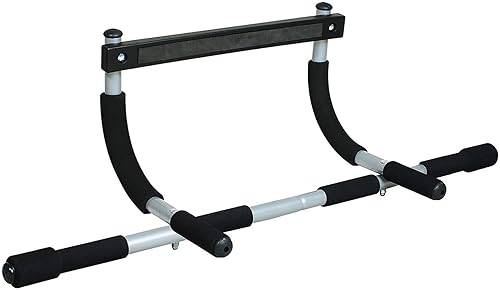
- No screws required — installs and removes in 30 seconds
- 3 grip positions: wide, shoulder-width, and neutral
- Fits 24–36 inch doorframes
Perfect Fitness Multi-Gym Doorway Pull Up Bar

- 4 grip positions — wide overhand, shoulder-width, narrow, and neutral parallel — covering all pull-up muscle targets
- Foam-padded side handles extend 10 inches for full neutral grip rows without elbow flare
- Adjusts to fit doorframes from 24 to 36 inches without tools
Sunny Health & Fitness Doorway Chin Up Bar

- 360 lb weight capacity — highest in class for doorway bars
- Extra-wide base distributes weight more evenly
- Three grip positions with padded handles
ProsourceFit Multi-Use Doorway Chin Up and Pull Up Bar

- Under $24 — lowest price among tested bars while still reaching 250 lb capacity
- 3 grip positions (wide, shoulder-width, close) in an 18-inch bar width for space-efficient mounting
- Folds flat to 28 inches for floor push-up and dip use
Ultimate Body Press Doorway Pull Up Bar

- Extended side handles allow full-width lat pull-down grip
- Integrated foam brackets protect doorframe finish
- Works as suspension anchor for resistance bands and TRX
Gronk Fitness Doorway Pull-Up Bar

- Knurled steel grips — no foam for serious athletic training
- Heavy-duty steel construction for aggressive training
- 300 lb weight capacity
I tested each pull-up bar over six weeks of daily training sessions including pull-ups, chin-ups, and hanging core exercises, evaluating stability in doorframe and wall-mounted configurations. Weight capacity was tested incrementally up to the claimed maximum to verify structural integrity and door frame protection.
Buying Guide
Installation Method: Pressure vs Mounted
Doorway pull-up bars use two main installation methods. Pressure-fit (no-screw) bars use the tension of your body weight against the doorframe to stay in place — they work on door frames with a lip or molding to brace against. These are quick to install and remove and don't damage doorframes. However, they only work with door frames that have a flat horizontal lip at least 2 inches wide. Mounted bars use screws to attach mounting plates to the door frame — more secure, higher weight capacity, but require a drill and permanent holes. Most home gym users prefer pressure-fit for flexibility. Confirm your doorframe type before purchasing — measure the horizontal flat surface where the bar will rest.
Weight Capacity and Safety
Standard doorway pull-up bars are rated for 250–300 lbs. Most manufacturers test to these limits with a static load, not dynamic loading from explosive movements. For pull-ups, dynamic loading (jumping, kipping) can significantly exceed your body weight — a 200-lb person doing kipping pull-ups may impose 400+ lbs of load on the bar. For heavy users or those doing dynamic/kipping movements, choose bars rated at 300+ lbs or use wall-mounted alternatives. Always check that your specific doorframe can support the load — the bar's rating is only as strong as the door frame and hardware mounting it. Never use pull-up bars on hollow-core interior doors.
Grip Positions and Training Versatility
Standard pull-up bars offer a single grip width. Multi-grip pull-up bars add neutral (parallel) grip handles on the sides and sometimes close-grip positions — significantly expanding training options. Neutral grip targets the biceps and reduces shoulder strain compared to palms-forward pull-ups. Wide grip hits the lats more broadly; close grip focuses on lower lats and biceps. For comprehensive upper body training, a bar with at least 3 grip positions (wide overhand, shoulder-width, neutral) provides enough variety. Some bars also include support brackets that allow push-ups and dips when the bar is placed on the floor — a nice bonus for a complete upper body circuit.
Doorframe Compatibility
Not all doorframes work with all pull-up bars. Key measurements: doorframe width (most bars work from 27 to 36 inches, with some accommodating wider 37–40 inch openings), frame depth (the horizontal surface where the bar rests — needs to be at minimum 2 inches wide), and clearance height (you need enough space above the bar to hang fully extended). Measure your doorframe before ordering — don't assume. Older homes with decorative molding on door frames may have irregular surfaces that prevent even pressure distribution. Modern interior doors (typically 80 inches high) leave adequate clearance for most users; door frames in tight hallways may be too narrow for wide multi-grip bars.
Padding and Grip Comfort
Hand comfort during pull-ups determines how long and how hard you train. Bare steel bars are the most durable but cause calluses with heavy use. Foam-padded bars are more comfortable initially but the foam compresses and tears over time — expect 6–18 months before foam needs replacement. Knurled steel (textured grip surface, like on barbells) provides excellent grip without foam, develops hand toughness, and is highly durable — preferred by serious athletes. For home gym use, foam padding is practical for casual to intermediate users; knurled steel for dedicated trainees. Some bars offer removable foam padding so you can use either style.
Portability and Storage
Pressure-fit doorway bars can be removed and stored in seconds — a major advantage for shared living spaces or apartments where permanent equipment is not appropriate. Most fold flat to about 2 feet long and lean against a wall or fit in a closet. For home gyms where the bar will be used daily, some users leave a pressure-fit bar permanently installed in a dedicated doorframe. Wall-mounted pull-up bars are permanent but offer significantly higher weight capacity, more grip positions, and the ability to move further from the wall for full-range exercises. For apartments and rentals, pressure-fit is the only practical option.
Frequently Asked Questions
Will a doorway pull-up bar damage my doorframe?
Properly installed and used pressure-fit bars should not structurally damage a standard solid wood doorframe. However, they can leave impressions, scuff marks, or paint wear on the contact points over time. To minimize damage: use the included door frame protection pads, distribute weight evenly (avoid swinging), and check the bar is positioned correctly with even contact on all support points. Never use a pull-up bar on hollow-core interior doors or weak door frames — these can crack or deform under load. For zero damage risk, use a wall-mounted pull-up station or power rack instead.
What doorframe dimensions do I need for a pull-up bar?
You need: (1) a doorframe width of 24–36 inches (most standard interior US doors are 28–36 inches), (2) a horizontal flat surface at the top of the door opening at least 2 inches wide for the bar to rest on, (3) approximately 20 inches above the bar for you to hang with arms extended. Measure before ordering — doorframes with decorative molding, narrow profiles, or non-standard dimensions may not accommodate standard doorway bars. Some bars have adjustable widths and different mounting profiles to fit more frame types.
Can I do more than pull-ups with a doorway bar?
Yes. Most multi-grip doorway bars can be removed and placed on the floor for push-up and dip exercises, as the extended handles create an elevated grip position. Some bars are designed specifically for floor use as well. Hanging exercises include pull-ups, chin-ups, neutral grip rows, hanging leg raises, and hollow body holds. With resistance bands looped over the bar, you can do face pulls, lat pull-downs, and tricep push-downs. A doorway bar is genuinely versatile for a full upper body and core routine with minimal equipment.
How much do I need to weigh to safely use a doorway pull-up bar?
There's no minimum weight — doorway pull-up bars accommodate any user who can perform a pull-up. Maximum weight capacity is the concern: most standard bars are rated for 250–300 lbs. If you weigh over 225 lbs, choose a bar explicitly rated for 300+ lbs (like the Sunny Health & Fitness at 360 lbs). Remember that your dynamic body weight during pull-ups (especially kipping or jumping) can exceed your static body weight — leave a safety margin and use smooth, controlled movement if near the weight limit.
Can I use a doorway pull-up bar if I live in an apartment?
Yes — pressure-fit doorway bars are the standard choice for renters. They require no drilling or mounting hardware and can be installed and removed in 30 seconds, leaving no permanent marks when used with the provided door frame pads. Some apartment leases restrict wall mounting of fitness equipment; doorway bars bypass this restriction entirely. One consideration: thin apartment doors and frames may have different structure than solid home construction — check that your doorframe can support your weight before heavy use.
How do I choose the right equipment for my fitness level?
Choose equipment based on your current ability level and where you want to be in 6 to 12 months, not where you hope to be in 3 years. Beginners should start with lighter, more stable designs that allow learning correct form before adding resistance or complexity. Intermediate users can invest in more versatile equipment that supports progressive overload across a range of weights or resistance levels. Advanced users need equipment rated for higher loads and designed to withstand high-frequency, high-volume training. Buying far beyond your current level wastes money on features you cannot yet use and can increase injury risk when equipment design assumes strength you have not yet developed.
What should I look for in terms of durability?
Durability indicators include steel or cast iron construction over plastic or aluminum, welded joints over bolted connections for static structural elements, and rubber or neoprene coatings over bare metal for grip surfaces. Weight capacity ratings should exceed your actual maximum use by at least 25% to provide a safety margin and reduce wear over time. Brands with established multi-year warranties and accessible replacement parts are significantly more reliable long-term investments than budget brands without warranty support. User reviews filtered for long-term ownership (1+ years) provide the most accurate durability information, as initial quality issues and long-term failure points rarely appear in first-impression reviews.
Our Verdict
The Iron Gym Total Upper Body Workout Bar is the classic for good reason — it reliably fits most doorframes, handles moderate weight, and installs in 30 seconds. For serious trainers, the Sunny Health & Fitness Doorway Chin Up Bar offers a wider stable design rated for 360 lbs. The Renoj Pull Up Bar provides the most training versatility for users wanting multiple grip positions, while the ProsourceFit Multi-Use bar delivers the best value under $25 for budget-conscious buyers.