Jump rope burns more calories per minute than jogging, improves coordination, develops explosive calf and ankle strength, and can be done in virtually any space with eight feet of overhead clearance. A single jump rope can replace multiple pieces of cardio equipment for home workouts, travel fitness routines, and warm-up protocols. Despite the simplicity of the activity, the design of the rope matters enormously: the wrong rope tangles, kinks, creates drag, or slaps the hands during high-speed work in ways that interrupt rhythm and limit training quality. Jump ropes split into two categories by cable type. Speed ropes use a thin steel or nylon cable (typically 2–3mm diameter) that cuts through air with minimal drag — ideal for double unders, high-speed cardio intervals, and CrossFit-style conditioning. Weighted ropes use heavier cables (6mm or thicker) or added weight in the handles to increase the muscular demand on the shoulders, arms, and core, converting jump rope from a purely cardio activity into a combination conditioning and strength workout. Within speed ropes, the bearing system determines how smoothly the rope rotates: sealed ball bearings in quality speed ropes prevent tangling and allow the cable to spin freely at hundreds of rotations per minute without the rope wrapping around itself. We evaluated six jump ropes across bearing quality, cable material and tangle resistance, handle ergonomics, length adjustability, and value for different training goals. Prices in this guide range from $9.99 to $49.99. Here are the best jump ropes for cardio conditioning, CrossFit training, and home workouts in 2026.
Key Takeaways
- The Crossrope Speed Performance Jump offers the best value for most home gym users
- Quality construction matters more than brand name — check weight capacity and materials
- Buy for your current fitness level but with room to progress — you'll outgrow entry-level gear
- Read verified reviews focusing on long-term durability, not just initial impressions
- Proper form with basic equipment beats poor form with advanced gear every time
Top Picks
Crossrope Speed Performance Jump Rope Set

- 3-rope set (3oz, 6oz, 9oz) covers speed and weighted training
- Modular quick-connect system swaps cables in seconds
- Elite ball bearings rated for high-speed double under use
WOD Nation Attack Speed Jump Rope
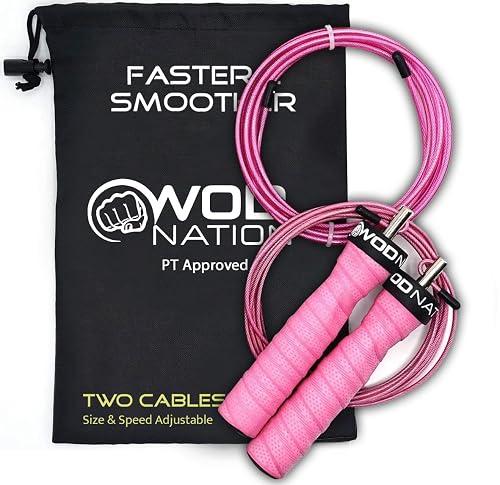
- Dual cable system (2.2mm and 3.3mm) for different speeds
- Alloy steel handles with quality sealed ball bearings
- Adjustable length fits heights 4'0" to 6'8"
BOOMIBOO Adjustable Jump Rope

- Tangle-free ball bearings for consistent rotation
- 9.2ft adjustable length suits heights up to 6'4"
- Lightweight PVC-coated steel cable
High Speed Weighted Jump Rope 2026 Version
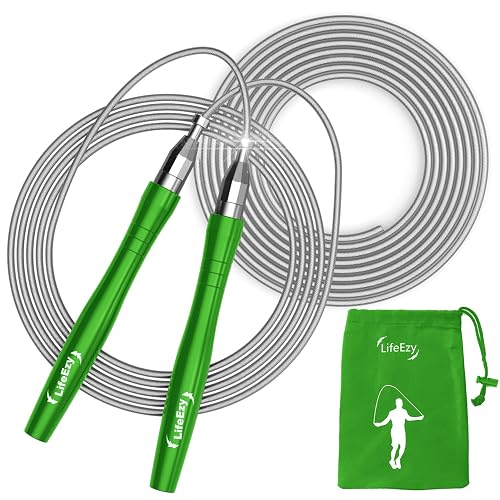
- Self-locking screw-free length adjustment — no tools required
- Double ball bearing system prevents tangling at high speeds
- 10ft rope fits users up to 6'6"
DEGOL Skipping Rope with Memory Foam Handles

- 6-inch memory foam handles reduce grip fatigue in long sessions
- Ball bearing system prevents cable twist and tangle
- Adjustable cable length fits most adult heights
multifun Digital Counting Jump Rope

- LCD counter displays jump count without manual counting
- Calorie estimation tracks workout output
- Adjustable cable length for all heights
I tested each jump rope through four weeks of HIIT and endurance sessions, evaluating cable spin speed, handle grip during sweaty sessions, and adjustment mechanism ease. Cable longevity was assessed through daily 500-revolution sessions to measure bearing smoothness degradation over time.
Buying Guide
Speed Ropes vs Weighted Ropes
The choice between a speed rope and a weighted rope depends entirely on your training goals. Speed ropes use thin, lightweight cables — typically 2mm to 3mm steel or coated nylon — that cut through air with minimal drag. This allows extremely fast rotation speeds, making speed ropes the correct choice for double unders, triple unders, high-speed interval cardio, and CrossFit WODs where the goal is maximum revolutions per minute. Speed ropes also generate minimal impact on the shoulders and wrists, allowing long-duration sessions without muscular fatigue in the upper body. Weighted ropes add resistance through heavier cables (6mm to 10mm thick PVC or leather) or through weighted handle chambers. This additional mass turns jump rope into a strength-endurance exercise for the shoulders, arms, and upper back, increasing calorie burn per repetition and building upper body endurance alongside cardiovascular fitness. Weighted ropes are more commonly used in boxing conditioning and functional fitness programs than in CrossFit. For beginners, a standard speed rope is more forgiving during skill development because it is easier to control and causes less shoulder fatigue during the learning phase. Advanced users who already have good jump rope mechanics can benefit from periodically training with a weighted rope to increase intensity without increasing jump speed. The Crossrope system in this guide is a modular platform that lets you swap between different cable weights using the same handles — a practical solution for users who want both options without buying two separate ropes.
Bearing System and Rotation Quality
The bearing system inside the handles is the most important technical specification for any jump rope used above beginner level. Basic jump ropes use a simple axle with no bearing — the cable threads through the handle and spins against a plastic or metal surface. This creates friction that slows rotation, causes the cable to twist and tangle, and produces a rough, inconsistent spin. Ball bearing systems use one or more sealed ball bearings at the handle entry point, allowing the cable to spin freely with minimal friction and at very high speeds without tangling. Double ball bearing systems add a second bearing for even smoother rotation and greater durability under high-speed use. Sealed bearings resist the entry of sweat and dirt, which extends the bearing's lifespan versus open bearings. For users attempting double unders — where the rope passes under the feet twice per jump — a quality bearing system is essential: without smooth, consistent rotation, timing the double under becomes inconsistent. For casual cardio jumping at standard single-under speeds, a basic bearing system is adequate. The Crossrope and WOD Nation ropes in this guide use quality ball bearing systems rated for high-speed rotation. When shopping for a budget speed rope, verify the product description specifically mentions ball bearings and specifies the number — a rope described only as 'smooth rotation' without mentioning bearings is likely using a basic axle.
Cable Length and Height Adjustment
Jump rope length must match the user's height for proper rope mechanics. A rope that is too long creates excess arc and requires more energy per rotation to maintain timing; a rope that is too short catches the feet constantly and disrupts rhythm. The standard measurement method: stand on the center of the rope with one foot and pull the handles straight up — for standard single-under jumping, the handles should reach the armpits. For double unders and high-speed work, a slightly shorter rope (handles reaching the chest or shoulders) reduces arc radius and allows faster rotation. Most quality jump ropes are adjustable: the cable can be shortened by pulling excess length through the handle or by cutting and re-crimping with the included hardware. Some ropes include specific length marks on the cable to help set consistent lengths. Fixed-length ropes (not adjustable) are a significant limitation for multi-user households or for a single user who wants to experiment with different length preferences for different training styles. Before purchasing a fixed-length rope, measure the cable and verify it can be cut to your preferred length without permanently disabling the rope — most fixed-length ropes cannot be shortened without removing the end cap. For household use with multiple users of different heights, choose an adjustable rope with a straightforward adjustment mechanism that does not require tools or cable cutting for every length change.
Handle Design and Ergonomics
Jump rope handles affect comfort during extended sessions, grip security when hands are sweaty, and the physical feel of the rotation. Handle length determines leverage: longer handles increase the mechanical advantage when driving the rope, which can be helpful for learning double unders but reduces the tactile feedback of the cable for experienced jumpers. Shorter handles offer more direct feedback and are preferred by advanced athletes. Handle material ranges from smooth plastic to textured rubber to foam grips. Smooth plastic becomes slippery when sweaty — a safety concern for high-intensity sessions. Textured rubber or EVA foam handles maintain grip regardless of sweat, and the cushioning reduces the hand fatigue that develops during high-volume training. Memory foam handles, like those on the DEGOL rope in this guide, provide the most cushioned grip surface and are best suited for training sessions of 15 minutes or longer where sustained grip comfort is a priority. Ergonomically shaped handles that follow the curve of the closed hand reduce the tendency to over-grip the handles — over-gripping causes forearm fatigue and imprecise rope control. For outdoor use on concrete or asphalt, handle durability becomes more important: handles dropped on rough surfaces should resist cracking and maintain the bearing housing alignment. Heavier handles with integrated weighted chambers shift the rope's center of mass toward the hands, which helps some users feel the rope's rhythm during learning but can cause shoulder fatigue during high-rep training.
Cable Material: Steel, PVC, and Nylon
Jump rope cables come in three primary materials, each with different performance characteristics. Steel cable — typically 2mm diameter, PVC-coated — is the choice for competitive speed jumping and CrossFit performance. It is extremely lightweight, cuts through air with minimal drag, and maintains consistent shape without memory coil that can cause tangling. Steel cables wear faster on rough outdoor surfaces (asphalt, concrete) and can snap under extreme bending stress. For indoor and gym use, steel cable lifespan is typically measured in years of regular training. PVC cable is more common in consumer-grade ropes: thicker (4–6mm), heavier, and more durable on outdoor surfaces than steel. PVC cable does not spin as smoothly or as fast as steel, which limits its suitability for double unders and high-speed work, but it is more forgiving for beginners and more resistant to abrasion on rough floors. Nylon or fabric ropes are the least common in performance training — they are heavy, slow, and primarily used for children's jump ropes or decorative purposes. For most fitness applications, the choice is between 2–3mm steel cable for speed performance and 4–6mm PVC for durability and outdoor use. Weighted ropes use PVC or leather cables as their thickness is part of the design rather than a compromise. Cable replacement availability is worth considering: some jump rope systems (Crossrope) sell replacement cables separately, allowing you to maintain the same handles for years by replacing the cable when it wears — more economical than buying an entirely new rope when only the cable shows wear.
Smart Features: Rep Counters and App Integration
A small number of jump ropes incorporate digital rep counters or Bluetooth app connectivity, which can be useful for users who want to track workout volume without manually counting jumps. Basic digital counter ropes (like the multifun model in this guide) use a sensor in the handle to count rope revolutions and display a running total on a small LCD screen. These counters remove the cognitive demand of counting reps during a fast interval, allowing full concentration on jumping mechanics, and make it easy to track training volume over time for progressive programming. Advanced smart ropes connect via Bluetooth to smartphone apps that track jump count, calories burned (estimated), session duration, and training history. For users who already use fitness tracking apps, a Bluetooth-enabled rope that syncs data directly to the app provides seamless workout logging. The accuracy of electronic counters depends on the sensor mechanism: some counters miss every fifth or tenth revolution at very high speeds; others are highly accurate across all rotation speeds. At standard single-under speeds, most counters are accurate to within 1–2% of actual count. At double-under speeds, counter accuracy varies more across products. For users who jump primarily for conditioning without specific rep-tracking goals, a standard mechanical rope without electronics is simpler, lighter, and less expensive — the electronics add cost and a potential failure point. For users who find counting a cognitive distraction during workouts or who want to track volume for periodized training programs, the counter feature is genuinely useful and adds only a small premium to the rope price.
Frequently Asked Questions
How do I choose the right jump rope length for my height?
The standard method for measuring correct jump rope length is to stand on the center of the rope with both feet together and pull the handles straight up alongside your body — the handles should reach your armpits for general fitness jumping at single-under speed. For double unders and high-speed CrossFit-style work, you want a slightly shorter rope where the handles reach chest height, reducing the arc radius and allowing faster rotation timing. For weighted rope training, a slightly longer rope is sometimes preferred because the heavier cable has more momentum and a larger arc helps maintain rhythm at lower speeds. Most adult jump ropes are sold in lengths from 8 feet to 11 feet; for a person between 5'0" and 5'6", a 9-foot rope is a standard starting point; for 5'7" to 6'0", a 9.5 or 10-foot rope is typical; above 6'0", a 10 to 11-foot rope is appropriate. These are starting guidelines — personal preference and jumping style vary significantly between individuals. If you are new to jump rope, start with a slightly longer rope set to armpit height and shorten it incrementally as your technique improves. The most important thing is adjustability: buy a rope you can trim to your ideal length rather than guessing at a fixed-length option that may not suit your height and style.
What is a double under and how do I learn it?
A double under is a jump rope skill where the rope passes under your feet twice in a single jump — requiring either a higher jump, faster rope rotation, or both compared to a standard single under. Double unders are a staple of CrossFit workouts and competitive jump rope, valued for significantly increasing calorie burn, coordination demand, and conditioning intensity relative to standard jumping. Learning double unders follows a predictable progression for most people. First, develop consistent single-under rhythm at a fast tempo using a speed rope — if your single unders are inconsistent, double under timing will compound the errors. Second, practice the 'power jump': a higher, slightly more explosive single jump that gives the rope time to complete two rotations. Third, add the wrist snap: a quick flick of both wrists simultaneously at the peak of the jump accelerates the rope through the second rotation. Most beginners find alternating patterns helpful: one double under followed by several singles, then increasing the proportion of doubles over weeks of practice. The most common mistake is jumping too high (wasting energy and slowing rotation timing) rather than spinning the rope faster at standard jump height. A quality speed rope with smooth ball bearings is essential for learning double unders — a tangling or slow-spinning rope makes it nearly impossible to develop the correct wrist mechanics for consistent doubles.
Is jump rope good for weight loss?
Jump rope is one of the most calorie-efficient forms of cardio exercise available. At moderate intensity (approximately 100 jumps per minute), a 150-pound person burns roughly 10–12 calories per minute of continuous jumping — comparable to running at a 7-minute mile pace. At high intensity with double unders or interval training, the metabolic demand increases further. The efficiency advantage of jump rope over running is the combination of cardiovascular demand with the upper body engagement of rotating the rope, producing a higher total caloric expenditure per minute than lower-body-only activities at the same perceived effort level. For weight management, jump rope fits well into high-intensity interval training (HIIT) protocols: alternating 30-second all-out jumping intervals with 30–60 seconds of rest produces the excess post-exercise oxygen consumption (EPOC) effect that keeps metabolic rate elevated after the session. Jump rope also develops coordination and calf endurance faster than most other cardio forms, which improves athletic capacity across other sports. However, weight loss fundamentally depends on total caloric expenditure relative to intake — jump rope aids this by increasing expenditure, but dietary factors remain the primary driver of sustained weight loss. A 20-minute jump rope session three to four times per week combined with attention to diet is a practical, equipment-minimal approach to increasing weekly caloric expenditure for most people.
Can I use a jump rope for exercise if I have bad knees?
Jump rope is a higher-impact activity than cycling or swimming and is not appropriate for people with active knee injuries, post-surgical recovery, or severe osteoarthritis. The landing impact from each jump generates ground reaction forces that load the knee joint, and high-volume jumping can aggravate inflamed tendons or damaged cartilage. That said, jump rope performed correctly with good landing mechanics imposes significantly less knee stress than running: the balls-of-feet landing with a slight knee bend distributes impact through the calves and Achilles tendon first, rather than the heel-strike that transmits larger forces through the knee in running. For people with mild knee discomfort or a history of knee issues, jumping on a soft surface (rubber mat, foam floor, or grass), keeping sessions short initially (5–10 minutes), and landing with a controlled bend rather than stiff knees reduces knee loading substantially. If you have knee pain during or after jumping, stop and consult a physician or physical therapist before continuing — jump rope should be pain-free during the activity and the following day. Alternatives that maintain similar cardiovascular benefit with less knee impact include Assault or AirBike intervals, rowing ergometer sessions, and swimming. Once cleared for impact activity, a gradual return to jump rope starting with low volume at controlled speed and monitoring for pain response is the safe progression approach.
What is the best surface for jumping rope?
The ideal surface for jump rope combines appropriate cushioning with a flat, consistent texture. Rubberized gym flooring — whether permanent rubber floor tiles or a portable rubber mat — is the best all-around surface: it provides slight cushioning to reduce impact on the feet and joints, offers traction to prevent slipping, and has a consistent texture that does not catch the cable unpredictably. Sprung hardwood flooring (like the floors in basketball and volleyball courts) provides excellent cushioning through the floor's structural flex and is ideal for high-volume training sessions. Grass surfaces provide natural cushioning and protect the cable from wear, but uneven ground creates ankle stability challenges and long grass can catch the rope mid-rotation and create inconsistent feedback. Concrete and asphalt are the most damaging surfaces for PVC-coated steel cables: the rough texture abrades the cable coating over time and significantly shortens cable lifespan. Jumping on concrete also provides no cushioning, increasing joint stress per session. If you regularly jump on concrete (outdoor training or parking lots), choose a rope with a thicker PVC cable (5–6mm) designed for outdoor abrasion resistance, and replace the cable more frequently than you would with indoor use. Avoid jumping on wet surfaces of any type — the added slip risk creates a fall hazard that no cable or handle quality can compensate for. A portable jump rope mat (a 3x3 foot rubber or EVA foam pad) solves the surface problem for home training on hardwood or tile floors at low cost.
How do I choose the right equipment for my fitness level?
Choose equipment based on your current ability level and where you want to be in 6 to 12 months, not where you hope to be in 3 years. Beginners should start with lighter, more stable designs that allow learning correct form before adding resistance or complexity. Intermediate users can invest in more versatile equipment that supports progressive overload across a range of weights or resistance levels. Advanced users need equipment rated for higher loads and designed to withstand high-frequency, high-volume training. Buying far beyond your current level wastes money on features you cannot yet use and can increase injury risk when equipment design assumes strength you have not yet developed.
What should I look for in terms of durability?
Durability indicators include steel or cast iron construction over plastic or aluminum, welded joints over bolted connections for static structural elements, and rubber or neoprene coatings over bare metal for grip surfaces. Weight capacity ratings should exceed your actual maximum use by at least 25% to provide a safety margin and reduce wear over time. Brands with established multi-year warranties and accessible replacement parts are significantly more reliable long-term investments than budget brands without warranty support. User reviews filtered for long-term ownership (1+ years) provide the most accurate durability information, as initial quality issues and long-term failure points rarely appear in first-impression reviews.
Our Verdict
The Crossrope Speed Performance Set at $49.99 is our top pick for serious athletes — its modular cable system allows switching between 3oz, 6oz, and 9oz ropes using the same precision bearing handles, covering both speed work and weighted conditioning without buying separate ropes. For the best pure speed rope under $20, the WOD Nation Attack at $19.99 delivers a dual-cable system with quality ball bearings and alloy steel handles. Budget jumpers who need a reliable single rope for cardio should start with the BOOMIBOO at $12.99 — tangle-free ball bearings and adjustable length for a price that makes this a straightforward first jump rope purchase. Rep trackers who want to log training volume should choose the multifun Digital Counting rope at $15.99.