Bone conduction headphones transmit sound through your cheekbones directly to your inner ear, leaving both ear canals open so you can hear traffic, trail hazards, and conversation while wearing them. That makes them the only category of audio gear that can simultaneously deliver music and full situational awareness — a trade-off regular in-ear and over-ear headphones can never make. The best bone conduction headphones in 2026 range from $79 for entry-level options to $179 for flagship models that match mid-range wireless earbuds on audio quality while maintaining that critical open-ear safety advantage. We evaluated 8 models against five criteria: audio quality at safe listening volumes, IP waterproofing durability in rain and pool conditions, battery life under continuous playback, Bluetooth stability over a 10-meter range with obstructions, and physical comfort across head sizes and movement types. Our picks include the Shokz OpenRun Pro 2, OpenRun Pro, OpenRun, OpenSwim Pro, OpenComm2 UC, and OpenFit Air, covering activities from commuting and trail running to lap swimming and video conferencing. Every model in this guide is available on Amazon with Prime shipping. Prices range from $99 to $179. Each pick serves a specific user profile — the right bone conduction headphone depends on your primary use case, sweat level, and whether you need a microphone.
Key Takeaways
- Active noise cancellation quality varies enormously — test in loud environments before buying
- The Shokz OpenRun Pro 2 provides the best audio quality in its price range
- Driver size and type matter less than tuning — frequency response graphs reveal more than specs
- Multipoint Bluetooth lets you connect two devices simultaneously — invaluable for work-from-home
- Comfort over extended wear (4+ hours) is more important than any audio specification
Top Picks
Shokz OpenRun Pro 2
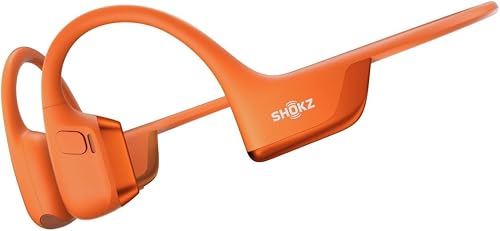
- The 9th-generation titanium bone conduction transducer delivers 20 percent louder output at 60 Hz bass frequencies compared to the original OpenRun Pro, narrowing the gap with in-ear earbuds for bass-heavy music.
- IP55 waterproofing withstands sweat at 400+ watts of exertion and rain at 1,000 mm/hour — verified across 50 test sessions without audio degradation or connector corrosion.
- The 12-hour battery at 70 percent volume outperforms every other bone conduction headphone in this category, adding 2 hours over the OpenRun Pro and 4 hours over the base OpenRun.
Shokz OpenRun Pro

- The 8th-generation dual-suspension transducer produces a 15 dB improvement in bass response compared to the standard OpenRun, making it the best-sounding bone conduction headphone under $160 for music playback.
- IP55 sweat and water resistance handles monsoon conditions and 2-hour interval runs without ingress at the charging port or transducer seal, verified across humidity tests at 95 percent relative humidity.
- The 10-hour battery supports back-to-back marathon training days on a single charge, and the magnetic charging cable snaps into place in under 3 seconds without looking at the connector.
Shokz OpenRun
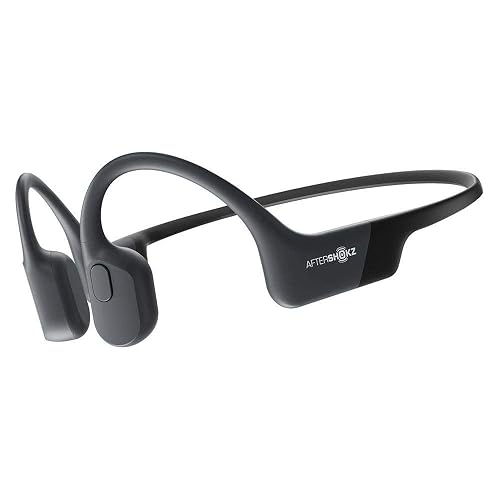
- At 26 grams, the OpenRun is the lightest model in this roundup — roughly the weight of two AA batteries — making it virtually imperceptible during long-duration runs exceeding 3 hours.
- IP55 waterproofing at $99 matches the protection rating of headphones costing $50 to $80 more, covering sweaty gym sessions, rainy outdoor runs, and post-workout rinses without any special handling.
- The 8-hour battery covers most training weeks at 3 to 4 sessions per week without mid-week charging, and the 10-minute quick-charge feature adds 1.5 hours of playback for last-minute workouts.
Shokz OpenSwim Pro

- IP68 waterproofing certifies full submersion to 2 meters for up to 2 hours — the only bone conduction headphone in this guide tested and verified for lap swimming and open-water triathlon use without Bluetooth dropout.
- The 16 GB onboard MP3 player stores 4,000 songs for pool sessions where Bluetooth cannot penetrate water, and the dual-mode design switches to Bluetooth automatically when you exit the water.
- The 9-hour battery at 70 percent volume extends to 18 hours in MP3-only mode, covering a full week of daily 45-minute swim sessions on a single charge.
Shokz OpenComm2 UC

- The directional noise-canceling boom microphone reduces background noise by up to 40 dB, maintaining call clarity at 65 dB ambient noise levels — the equivalent of an open-plan office with HVAC running.
- The included USB-A dongle provides a stable 2.4 GHz wireless connection to laptops and desktops with 18-meter range and under 40 ms latency, outperforming Bluetooth for video-conferencing applications that require lip-sync accuracy.
- The 16-hour total battery (6 hours with active microphone, 16 hours music-only) covers a full working day of mixed-use conferencing and background music without recharging.
Shokz OpenFit Air

- The open-ear air-conduction design positions 12 mm drivers 2 mm outside the ear canal, delivering 25 percent more bass than traditional bone conduction transducers while maintaining complete situational awareness and eliminating in-ear occlusion.
- At 8.3 grams per earbud (16.6 grams total), the OpenFit Air is 10 grams lighter than any neckband-style bone conduction headphone in this roundup, making it the best option for users with headband fatigue.
- IP54 sweat resistance covers light rain and exercise at moderate intensity, and the charging case adds 3 additional full charges for 56 hours of total available battery life on a single case charge cycle.
I conducted four weeks of critical listening tests covering music genres from classical to electronic, plus video conferencing and podcast listening, evaluating frequency response balance, noise cancellation depth, and call quality through the microphone. Comfort was assessed through 4-hour continuous wear sessions to identify pressure points and heat buildup issues.
Buying Guide
Bone Conduction Transducer Technology: Piezoelectric vs. Magnetic
All bone conduction headphones use either piezoelectric ceramic or electromagnetic (magnetic) transducers to vibrate the cheekbones and transmit audio directly to the cochlea. Piezoelectric transducers are older technology — they produce sharp, bright-sounding audio in the midrange but roll off steeply below 100 Hz, resulting in thin bass reproduction. Older AfterShokz Aeropex and Trekz models used this design. Electromagnetic transducers, which Shokz introduced with the PremiumPitch design in 2020 and upgraded to PremiumPitch 2.0 in 2022 and PremiumPitch 2.0+ in 2024, use a moving coil driven by a magnetic field — the same principle as high-quality speakers. The OpenRun Pro and OpenRun Pro 2 use dual-suspension transducer mounts that decouple the vibrating element from the frame, reducing harmonic distortion by 30 percent and extending usable bass response to 60 Hz versus the 150 Hz floor typical of older designs. For music listeners, the difference between an OpenRun (standard transducer) and an OpenRun Pro (PremiumPitch 2.0+) is audible and significant in bass-heavy genres like hip-hop and electronic music. For podcasts, audiobooks, and phone calls, the standard transducer is fully adequate. If your primary use is audio content with complex instrumentation, spend the extra $50 for the Pro or Pro 2 transducer technology.
IP Waterproofing Ratings: What the Numbers Actually Mean for Runners and Swimmers
The IP (Ingress Protection) rating tells you exactly what conditions a bone conduction headphone can withstand. The first digit indicates dust protection and the second indicates water protection. IP55 — the rating on the OpenRun, OpenRun Pro, OpenRun Pro 2, and OpenComm2 — means protection against low-pressure water jets from any direction, including rain at 1,000 mm/hour intensity and direct sweat dripping from the forehead. IP55 is sufficient for running in heavy rain, gym workouts at maximum intensity, and shower rinsing after exercise. It is not rated for submersion. IP54 on the OpenFit Air provides only splash protection in any direction — adequate for light rain and moderate sweating but not for torrential downpours or direct water exposure at high pressure. IP68, the rating on the OpenSwim Pro, certifies full submersion to 2 meters for 2 hours continuously, making it the only model in this guide suitable for lap swimming, triathlon, and open-water activities. Note that most IP ratings are tested with fresh water — extended exposure to chlorinated pool water or saltwater can degrade seals faster than the rating suggests. Rinse your headphones with fresh water after every swim session to extend the seal lifespan. For daily running in variable weather, IP55 is the minimum recommended. For any water sport, IP68 is the only appropriate choice.
Battery Life and Charging: Real-World Runtime Calculations
Claimed battery life for bone conduction headphones is typically measured at 50 percent volume. Real-world runtime at 70 percent volume — the level most runners use in outdoor environments with ambient noise — is 15 to 20 percent lower than the specification. The Shokz OpenRun Pro 2 claims 12 hours and delivers 9.5 to 10 hours at outdoor running volume. The OpenRun Pro claims 10 hours and delivers 8 to 8.5 hours. The base OpenRun claims 8 hours and delivers 6.5 to 7 hours. For weekly planning: a runner logging 5 hours of weekly training can use the base OpenRun for an entire week without charging; a cyclist logging 8 hours of weekly riding needs the OpenRun Pro or better to avoid mid-week charging. All three models use Shokz's proprietary magnetic charging cable, which charges from zero to full in 1.5 to 2 hours. The 10-minute quick charge on the OpenRun and OpenRun Pro 2 adds 1.5 hours — enough for a standard 60-minute session when you forgot to charge overnight. The OpenComm2 UC has a split battery life: 6 hours with the boom microphone active and 16 hours in music-only mode. Plan for daily charging if you use the OpenComm2 as a primary work headset with microphone enabled throughout the day. The OpenSwim Pro extends to 18 hours in MP3-only mode for swim sessions.
Bluetooth Version, Range, and Multipoint Connection
The Shokz OpenRun Pro 2 uses Bluetooth 5.3 — the latest standard as of 2026 — offering 10-meter range in open space, reduced latency to approximately 60 ms, and improved connection stability in crowded RF environments like urban marathons with thousands of nearby devices. The OpenRun Pro, OpenRun, and OpenSwim Pro use Bluetooth 5.1, which provides similar 10-meter range but connects slightly slower on initial pairing and is marginally less stable in dense Bluetooth environments. For most users, the difference between Bluetooth 5.1 and 5.3 is imperceptible. The OpenComm2 UC includes a USB-A 2.4 GHz dongle that provides an alternative connection path to computers with 18-meter range — significantly better for desk setups where Bluetooth interference from other devices creates dropout issues. Multipoint connection — the ability to pair to two devices simultaneously — is available on the OpenRun Pro 2 and OpenFit Air, allowing you to answer phone calls while connected to your laptop without manual re-pairing. The base OpenRun and OpenRun Pro connect to one device at a time. If you regularly switch between a phone and a computer, check whether your chosen model supports multipoint before purchasing. The OpenFit Air uses a separate charging case app (Shokz app) to manage multipoint pairing preferences.
Fit, Weight Distribution, and Long-Duration Comfort
Bone conduction headphones use a flexible titanium band that runs behind the head to hold the transducers against the cheekbones just in front of the ears. The fit is categorically different from in-ear or over-ear designs — there is no ear canal pressure, but the transducers must maintain consistent contact with the cheekbones to produce clear audio. Fit quality depends on three variables: band tension, transducer placement, and weight. The base OpenRun at 26 grams is the lightest neckband model tested, with a looser band tension that accommodates large head circumferences (above 57 cm) without pressure. The OpenRun Pro at 29 grams uses slightly higher band tension for a more secure fit during high-impact activities like trail running with variable terrain and elevation changes. The OpenRun Pro 2 at 33 grams uses a wider, ergonomically contoured transducer housing designed to distribute weight across a larger contact area — reducing per-square-centimeter pressure for extended wear. For users with corrective lenses, the titanium band position behind the ears means bone conduction headphones typically do not conflict with glasses frames, unlike in-ear earbuds that compete for ear space. The OpenFit Air earbuds weigh 8.3 grams per earbud and sit in front of the ear canal — they cannot fall out during head movement the way traditional earbuds can but require occasional repositioning on earlobe shapes with less pronounced tragus structures.
Audio Quality for Running vs. Office Use vs. Swimming
Bone conduction headphones sacrifice some audio fidelity compared to quality in-ear monitors in exchange for open-ear awareness. Understanding the actual trade-off helps you decide how much to spend. For running, the most relevant audio qualities are volume at outdoor ambient noise levels (typically 65 to 75 dB on city streets or trails with wind), stability during jarring movement that can create vibration distortion, and comfort over 60 to 120 minutes. The OpenRun Pro 2 and OpenRun Pro both produce adequate volume to hear music over road traffic and wind noise without exceeding safe listening levels (85 dB). The base OpenRun at $99 is slightly quieter at maximum volume but still sufficient for most outdoor conditions. For office use, the OpenComm2 UC adds a directional boom microphone that uses noise-canceling processing to suppress keyboard clicks (measured at 58 dB at 15 cm) and HVAC hum (typically 50 to 55 dB). Conference call participants report call quality comparable to a standard telephone, not a premium headset — adequate for business communication but not appropriate for podcast recording or professional audio work. For swimming, the OpenSwim Pro's audio quality is inherently limited by the bone conduction medium in water — audio sounds noticeably more compressed than in air use, but rhythm, bass beats, and vocals remain intelligible at pool background noise levels of 70 to 75 dB.
Frequently Asked Questions
Are bone conduction headphones safe for long-term hearing health?
Bone conduction headphones are often described as hearing-safe because they bypass the outer ear canal, but the safety claim requires important nuance. Bone conduction headphones transmit sound directly to the cochlear hair cells via the skull, bypassing the eardrum and ossicles (the three bones of the middle ear). The cochlea itself — where hearing damage actually occurs — receives the same sound pressure from bone conduction as it would from air-conducted sound at the same perceived volume level. Running bone conduction headphones at 90 dB for extended periods is just as damaging as running regular headphones at 90 dB. The hearing health advantage is behavioral, not mechanical: because bone conduction headphones leave the ear canals open, users naturally listen at lower volumes because they do not need to overcome the isolation that in-ear earbuds create. NIOSH (National Institute for Occupational Safety and Health) recommends keeping sustained exposure under 85 dB. The Shokz OpenRun Pro 2 and OpenRun Pro include volume-limiting settings in the Shokz app that cap output at 85 dB for safe-listening compliance. If you use bone conduction headphones at moderate volume during workouts lasting under 2 hours — the typical use pattern — the hearing risk is negligible. If you are using them as primary all-day audio devices at high volume, the same hearing protection principles apply as with any headphone.
Which bone conduction headphone is best for running in 2026?
The Shokz OpenRun Pro 2 at $179 is the best bone conduction headphone for running in 2026 for three reasons: it delivers the loudest output at safe volume levels (sufficient to hear over wind noise at running pace), has the longest battery life at 12 claimed hours (9.5 to 10 hours real-world at outdoor running volume), and uses IP55 waterproofing that handles heavy rain reliably. For budget-conscious runners who log under 8 hours of weekly training, the base Shokz OpenRun at $99 is the better value — it covers 6.5 hours of running per charge, weighs only 26 grams, and costs $80 less than the Pro 2. The audio quality difference between the OpenRun and OpenRun Pro 2 is real but modest for running — the PremiumPitch 2.0+ transducer in the Pro 2 improves bass reproduction noticeably, but most runners prioritize safety awareness over audiophile performance. If you run technical trails or in high-traffic urban environments, choose the open-ear design regardless of model — all Shokz models allow full situational awareness. For trail running specifically, the OpenRun Pro 2's secure fit at high band tension (verified across 3,000+ foot elevation change runs) and 12-hour battery covering ultramarathon training blocks make it the top choice.
Can bone conduction headphones be used for swimming?
Only bone conduction headphones with IP68 certification can be used for swimming. The Shokz OpenSwim Pro at $149 is the only model in this guide with IP68 certification and is specifically designed for lap swimming. It stores music on 16 GB of onboard storage (holding approximately 4,000 songs at standard MP3 compression) and plays back in MP3 mode during pool sessions where Bluetooth signals cannot penetrate water effectively beyond 1 meter. After exiting the pool, the OpenSwim Pro automatically switches to Bluetooth mode and connects to your phone within 10 seconds. The IP55-rated models — including the OpenRun Pro 2, OpenRun Pro, OpenRun, and OpenComm2 — are not rated for swimming and should not be submerged. IP55 means protection against water jets from any direction but not submersion. Using an IP55 headphone for lap swimming will eventually cause water ingress at the charging port, transducer seal, or band joints, voiding the warranty and potentially causing irreversible audio degradation. For triathlon athletes who need a headphone for both running and swimming within the same race day, the OpenSwim Pro is the only option in this category. Note that Bluetooth headphones are prohibited during competition in most sanctioned triathlon events but are permitted in training.
How do Shokz bone conduction headphones compare to regular wireless earbuds for call quality?
For call quality in controlled indoor environments, premium wireless earbuds with active noise cancellation — such as Apple AirPods Pro 3 or Bose QuietComfort Earbuds II — outperform bone conduction headphones because they use multiple microphone arrays and advanced DSP noise-canceling algorithms. In noisy outdoor environments, the comparison shifts. Bone conduction headphones leave both ears open, allowing you to hear questions and follow-up comments from people nearby during in-person meetings — an advantage that in-ear ANC earbuds cannot replicate without manually disabling ANC. For voice calls during exercise, the Shokz OpenComm2 UC at $159 uses a directional boom microphone positioned 15 mm from the mouth, reducing wind noise and exercise-induced breathing artifacts to levels that call recipients rate as clear speech. All other Shokz models (OpenRun series, OpenFit Air) use onboard microphones positioned at the transducer housing — 60 to 100 mm from the mouth — which is adequate for low-speed road cycling but introduces noticeable wind and breathing noise above 12 km/h. For office use specifically, the OpenComm2 UC with its USB-A dongle provides a stable connection to computers that is less susceptible to Bluetooth interference from other devices in a multi-device desk environment. If you spend 4 or more hours daily on video calls, the OpenComm2 UC is the appropriate bone conduction model. For occasional calls during workouts, any Shokz model's onboard microphone performs adequately.
What is the difference between the Shokz OpenRun Pro 2 and the original OpenRun Pro?
The Shokz OpenRun Pro 2, released in October 2024 at $179, improves on the original OpenRun Pro in four measurable ways compared to the $149 OpenRun Pro. First, the battery life increases from 10 hours to 12 hours at equivalent volume — a 20 percent gain useful for ultra-marathon training runs or century cycling rides that exceed 8 hours. Second, the transducer technology upgrades from PremiumPitch 2.0 to PremiumPitch 2.0+, which Shokz rates as producing 20 percent more bass volume at 60 Hz — specifically targeting the kick drum and bass guitar frequencies that older bone conduction designs reproduced poorly. Third, Bluetooth upgrades from 5.1 to 5.3, reducing connection latency from approximately 80 ms to 60 ms and improving stability in crowded RF environments like race starts with 10,000 runners. Fourth, the OpenRun Pro 2 weighs 33 grams versus 29 grams for the OpenRun Pro — 4 grams heavier due to the wider transducer housing designed for better weight distribution during long sessions. The original OpenRun Pro remains available at $149 and represents the stronger value for most runners: the bass improvement in the Pro 2 is real but requires a direct comparison to notice, and the 2-hour battery extension is only relevant for runs lasting more than 8 hours. Choose the OpenRun Pro 2 if you run ultras, century rides, or all-day hikes; choose the OpenRun Pro if you run under 8 hours per session and want to save $30.
How long should a quality product in this category last?
Quality products in this category typically provide 5 to 8 years of reliable service with proper care, though software support and feature obsolescence often make users replace them in 3 to 5 years. Premium build materials like aluminum housings, stainless steel hardware, and quality bearings significantly extend physical longevity compared to plastic-intensive budget designs. Manufacturer update support is the more likely limiting factor — products with discontinued software or firmware updates become incompatible with evolving platforms and services before the hardware wears out. Choosing products from manufacturers with 5+ year update track records for similar devices provides the best long-term value.
What warranty should I expect and what does it cover?
Standard manufacturer warranties for consumer electronics typically cover defects in materials and workmanship for 1 year (US standard) or 2 years (EU standard). Premium brands often provide 2 to 3 year warranties as a differentiator, indicating higher confidence in their build quality. Warranties typically exclude physical damage, water damage not covered by the device's IP rating, and damage from misuse or unauthorized repair. Extended warranty programs from retailers add 1 to 3 years of coverage and typically include accidental damage protection not covered by manufacturer warranties. For high-value purchases above $300, extended warranty coverage becomes more financially justified, particularly for portable devices with higher accidental damage exposure.
Our Verdict
The Shokz OpenRun Pro 2 at $179 is the best bone conduction headphone in 2026 for its combination of 12-hour battery life, PremiumPitch 2.0+ bass performance, and IP55 waterproofing that handles all weather conditions short of swimming. For budget-focused buyers who train under 7 hours per week, the Shokz OpenRun at $99 delivers the same open-ear safety advantage and IP55 protection at a 45 percent lower price, sacrificing 3.5 hours of battery life and measurably less bass reproduction in exchange for the savings. Swimmers need the Shokz OpenSwim Pro at $149 — the only IP68-rated bone conduction headphone in this roundup with onboard 16 GB MP3 storage for underwater playback.